The $800 Drywall Sanding Trap DIYers Fall Into
Drywall repair and finishing appear straightforward for weekend projects. Homeowners often believe that joint compound, sandpaper, and effort suffice to achieve professional-quality smooth walls. However, this confidence frequently results in a common and costly error in home renovation: the drywall sanding trap. A simple fix can escalate into an $800 correction when uneven surfaces, gouges, and dust contamination emerge.
Why the Sanding Trap Occurs
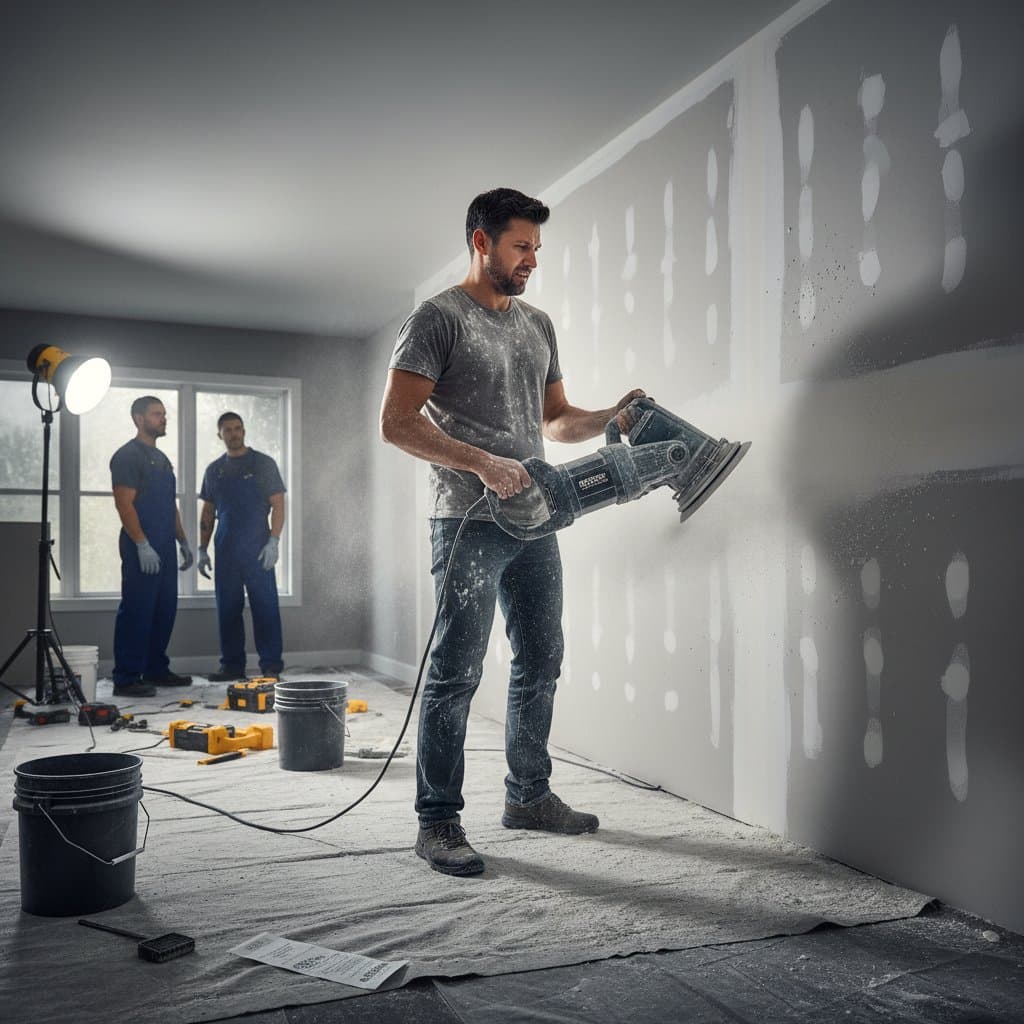
The drywall sanding trap typically starts with positive intentions. A homeowner patches dents or seams and then sands to blend the repairs. Lacking professional tools or techniques, the process removes excessive compound or creates swirl marks visible under paint. Light reflection highlights every imperfection, and once paint covers the surface, those flaws become irreversible without rework.
The outcome is a wavy, patchy, or dusty surface. Reskimming, re-sanding, and repainting provide the only remedy. Professional intervention to address these problems often totals several hundred dollars, approaching $800 for larger affected areas.
Project Cost Breakdown
Average Cost Ranges
- Basic drywall sanding repair: $350 - $500
- Standard resurface and repaint: $600 - $800
- Full wall restoration and repaint: $900 - $1,200
What the Costs Cover
- Labor for precise sanding and surface correction
- Joint compound reapplication with texture matching
- Thorough dust removal and site protection measures
- Priming and painting for a seamless finish
Additional Expenses
- Severe wall damage or deep gouges requiring extra materials
- Ceiling sanding or elevated overhead tasks
- Repainting extensive sections or complete rooms
- Specialized dust containment for allergy-prone or furnished spaces
Factors Influencing Total Cost
| Factor | Cost Impact | Examples |
|---|---|---|
| Wall size and height | Increases for expansive areas | Cathedral ceilings or stairwells |
| Pre-existing damage | Elevates time and materials | Over-sanded joints or exposed tape |
| Paint quality | Impacts material expenses | High-end paints or textured finishes |
| Access and cleanup | Boosts labor requirements | Confined spaces or dense dust buildup |
Reasons DIY Sanding Fails
Sanding drywall requires exacting precision despite its apparent simplicity. The primary error among DIYers involves selecting inappropriate grit or applying excessive pressure. Coarse sandpaper, such as 80 to 100 grit, strips away too much joint compound, forming depressions or revealing tape edges. Finer options, like 220 grit, may create glossy patches that hinder paint adhesion if applied unevenly throughout the surface.
Dust management presents another challenge. Without containment, fine particles infiltrate the entire home, settling on furniture and HVAC systems. Professionals employ vacuum-equipped sanders or pole sanders with built-in extraction to preserve air quality and ensure uniform finishes.
Proper lighting proves essential as well. Experts use angled or raking light to expose flaws prior to painting. Homeowners who overlook this often discover issues only after the final coat, amplifying correction expenses.
Indicators for Hiring a Professional
A handyman suits minor tasks like sanding small patches or nail holes. For comprehensive room resurfacing, ceiling fixes, or multi-patch walls, engage a licensed drywall specialist. These experts arrive with dustless sanding equipment, broad-bladed knives, and skills to replicate existing textures accurately.
Professional involvement guarantees surfaces meet painting criteria. Even superior paint accentuates irregularities if preparation falters. The expense of expert sanding and prep generally falls below the price of repainting a flawed room.
DIY Versus Professional Cost Comparison
| Task | DIY Estimated Cost | Professional Cost | Expected Outcome |
|---|---|---|---|
| Small patch sanding | $30 - $50 | $100 - $150 | Suitable for isolated spots |
| Full wall sanding | $80 - $120 | $300 - $500 | Smoother, more even professional results |
| Ceiling sanding | $100 - $150 | $400 - $700 | Reduced dust and consistent texture with pros |
| Full resurface and paint | $150 - $250 | $600 - $800 | Durable, flawless professional finish |
Initial differences appear modest, yet error corrections can double overall expenditures.
Strategies to Prevent the $800 Error
Homeowners safeguard their efforts through thorough preparation and timely assistance. Prime patched sections before sanding to seal the surface. Employ raking light to inspect progress, and test techniques on inconspicuous areas prior to broader application. Invest in vacuum sanders or dust-trapping sponges for superior cleanliness without significant added cost.
For projects spanning multiple walls or featuring prominent patches, professionals complete the work swiftly and produce paint-ready results. This approach minimizes long-term issues and preserves project budgets.
Preparing for Success
Assess repair scope and available tools before commencing drywall sanding. Light tasks like securing nail pops or smoothing screw holes demand patience and gentle abrasion. Seams, broad patches, or ceiling elements warrant professional evaluation. Obtain detailed estimates covering labor, materials, and post-work cleanup. Inquire about dust mitigation and quality assurances.
When reviewing proposals, prioritize comprehensive service over the lowest bid. Inadequate preparation or cleanup risks future defects. Select contractors who detail their methods and maintain transparent updates on inclusions.
Frequently Asked Questions
Why Does DIY Drywall Sanding Frequently Prove More Expensive?
DIYers often misjudge the precision required for sanding. Excessive abrasion or irregular spots necessitate resurfacing and repainting. Remedying these errors through professionals can reach $800, exceeding the initial cost of expert preparation.
How Long Does Professional Drywall Sanding Require?
Sanding, repairing, and cleaning a modest room typically spans one day. Extensive patching or larger areas may extend to two or three days. Efficiency stems from dustless tools and optimized equipment.
Under What Conditions Is DIY Sanding Viable?
DIY suits isolated fixes, such as nail hole fills or minor touch-up smoothing. Projects involving joints, taped seams, or whole-wall prep benefit from professional handling for safety and economy.
What Qualities Define a Reliable Drywall Contractor?
Verify insurance coverage, drywall finishing expertise, and prior project samples. Demand itemized estimates separating materials from labor. Established professionals outline dust control and thorough cleanup procedures.
How Can You Confirm Proper Wall Sanding?
Glide your hand over the surface under bright, angled light. It should feel uniformly smooth without ridges or gloss. Walls appear consistent from various viewpoints, free of marks or residue.
What Signals Indicate Substandard Drywall Sanding?
Exposed tape lines, irregular contours, and powdery paint finishes reveal sanding shortcomings. Blotchy or lackluster paint suggests unclean or unprimed surfaces. Early intervention averts escalated repair costs.