Avoid the $800 Deglossing Mistake Common Among DIY Painters
Consider one of the most frequent and expensive errors in do-it-yourself painting projects. Social media often features rapid deglossing techniques that claim to prepare old cabinets for painting quickly. Such methods appear appealing, yet they carry a significant risk. Improper preparation or incorrect use of liquid deglosser can result in the need for an $800 rework.
This issue appears regularly in professional settings and client homes. The paint surface may seem glossy and even for several weeks before peeling occurs in large sections. Such outcomes prove frustrating and costly. Proper techniques ensure that paint remains intact and expenses stay controlled.
Understanding What Deglossers Actually Do
Deglossers serve as chemical agents that mildly soften or dull glossy surfaces. These products create a texture that allows new paint to adhere effectively. However, deglossers do not clean, remove old layers, or conceal flaws. View them as supportive tools rather than complete solutions.
For instance, painting laminate cabinets requires more than a deglosser. A specialized bonding primer proves essential for smooth surfaces. In cases of solid wood or previously painted areas, combining light sanding with deglosser yields excellent outcomes. Success depends on integrating approaches rather than substituting one for another.
Professional workflows, including those under time constraints, emphasize layered efficiency. Cleaning precedes deglosser application, followed by gentle scuff-sanding and priming. This order maintains speed while upholding standards.
Budget Levels: Preparation Options for Every Financial Plan
Professional-level adhesion remains achievable regardless of spending level. The following categories outline approaches tailored to different budgets, allowing selection based on project needs.
Low or No Budget
- Employ household degreasers, sanding sponges, and thorough effort.
- Omit deglosser if necessary, but always include cleaning and sanding.
- Utilize any available bonding or stain-blocking primer remnants.
Mid Spend
- Purchase a reliable deglosser and a quart of bonding primer.
- Incorporate painter’s plastic sheeting and tack cloths to minimize dust contamination.
- Anticipate durable results with reduced need for corrections.
Higher Spend
- Select premium items such as shellac-based primers and dedicated cabinet paints.
- Acquire a compact HVLP sprayer for superior surface smoothness.
- Engage a professional for application tasks while managing preparation to balance costs and quality.
Regardless of choice, adherence to proper sequence and attention to detail remains crucial. Each element builds upon the previous one for optimal performance.
Common Signs of Impending Preparation Errors
Identify these indicators to prevent issues before applying paint.
- Cleaning was omitted because the surface appeared clean.
- Deglosser was applied to laminate or plastic materials.
- The surface retains a slippery texture after treatment.
- Paint was added without conducting an adhesion check.
If these situations apply, halt progress and evaluate the approach. Perform a basic adhesion test by applying paint to a small area, allowing it to cure, and attempting to scratch it gently with a fingernail. Easy lifting signals the need for enhanced preparation.
Consequences of Inadequate Surface Preparation
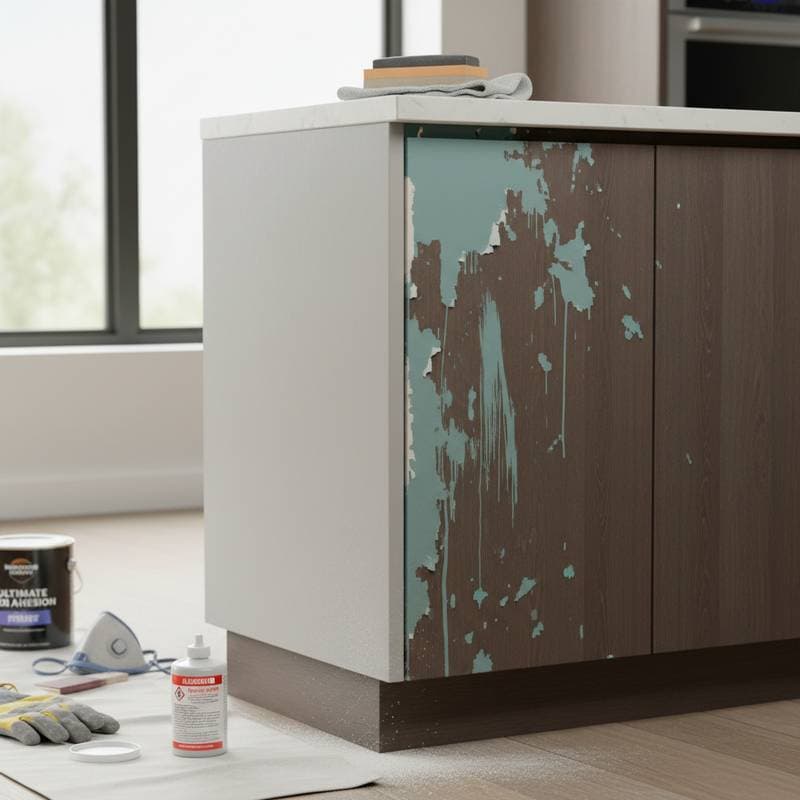
One homeowner applied paint to her kitchen island using solely a liquid deglosser. The appearance remained attractive for two weeks until friction from barstools caused paint to wear at edges. Chipping soon affected all corners, necessitating full sanding, primer purchase, and repainting. The total expense reached approximately $800 for supplies and effort.
Similar scenarios occur in numerous DIY endeavors. Initial appearances may deceive, but weaknesses emerge under daily use. Areas like handles, edges, and moisture-exposed zones highlight poor bonding rapidly.
Professional Tips for Flawless Finishes
In demanding environments, reliable adhesion supports finishes that withstand handling and adjustments. Adapt these strategies for home use to achieve comparable reliability.
- Evaluate color and sheen under both natural and artificial lighting conditions.
- Maintain a microfiber cloth at hand to address drips and debris promptly.
- Position doors on painter’s pyramids or supports to access all edges fully.
- Organize hardware in labeled bags according to original cabinet positions for efficient reinstallation.
These practices enhance both aesthetic appeal and practical durability.
Achieving Lasting Results Through Proper Preparation
Effective preparation transforms painted surfaces into resilient features suited to everyday demands. Clean bases, secure bonds, and appropriate sealers permit routine cleaning and maintenance without concerns of flaking or fading.
When considering deglosser use, recognize its role as a complementary step. Integrate it with thorough cleaning, sanding, and priming to eliminate risks of expensive corrections.