Biophilic Terracotta: 2026's Surging Paint Trend
Terracotta emerges as a prominent force in interior design, extending beyond traditional pottery and tiles into the realm of paint colors. This trend draws from the earth, featuring soft clay tones, sunbaked oranges, and grounding browns that evoke warmth and vitality. Biophilic terracotta fosters a reconnection with nature through color, texture, and emotional resonance. Homeowners can apply it to a single accent wall or an entire residence to achieve harmony, calm, and vibrancy simultaneously.
Why Biophilic Terracotta Resonates
Individuals seek comfort and connection in their surroundings, and terracotta provides both effectively. Biophilic design addresses the human affinity for natural elements, encompassing more than vegetation and illumination. Earthy palettes influence mood and energy levels profoundly. Terracotta hues, reminiscent of clay, sand, and sun-warmed soil, create peaceful yet invigorating atmospheres that feel both familiar and innovative.
These colors enhance spatial balance, as observed in professional settings where terracotta finishes interact seamlessly with lighting. The result promotes a sense of equilibrium, benefiting living rooms, offices, and other areas alike.
The Color Spectrum of Terracotta
Terracotta encompasses a diverse range of shades, each offering unique character. Variations include warm reds, soft peaches, dusty roses, and muted browns, allowing for tailored narratives in design.
- Soft Clay: Suited for serene, minimalist environments. It complements pale woods, linen fabrics, and matte black accents seamlessly.
- Burnt Orange: Delivers bold cheerfulness, ideal for feature walls or kitchen cabinetry. This shade contrasts effectively with crisp white trim or brass hardware.
- Nutmeg Brown: Provides depth and grounding, perfect for dining rooms or libraries seeking intimacy and warmth.
- Peach Terracotta: Offers a subtle tone that enhances natural light. It suits bedrooms, nurseries, or creative studios well.
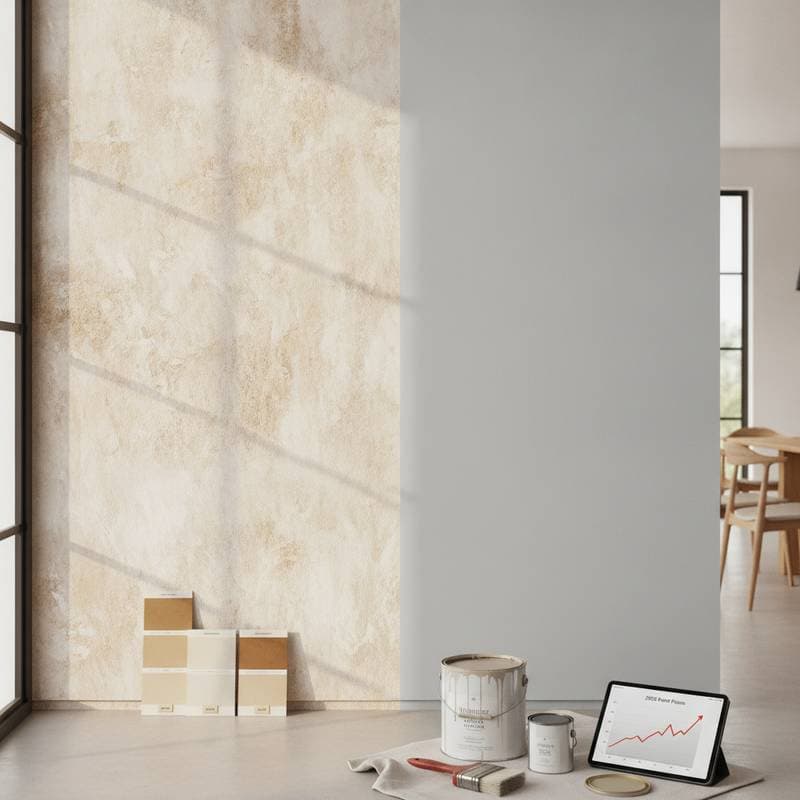
To select the appropriate shade, test samples under various lighting conditions. Daylight may reveal a mellow quality, while warm lamps can intensify the hue. Applying large sample patches prevents costly adjustments later.
The Biophilic Connection
Biophilic terracotta paints transcend aesthetics by impacting well-being. Earthy tones reduce visual strain and improve concentration. Walls mimicking natural materials foster supportive environments that ease breathing and sharpen focus. This effect stems from biological responses to organic elements.
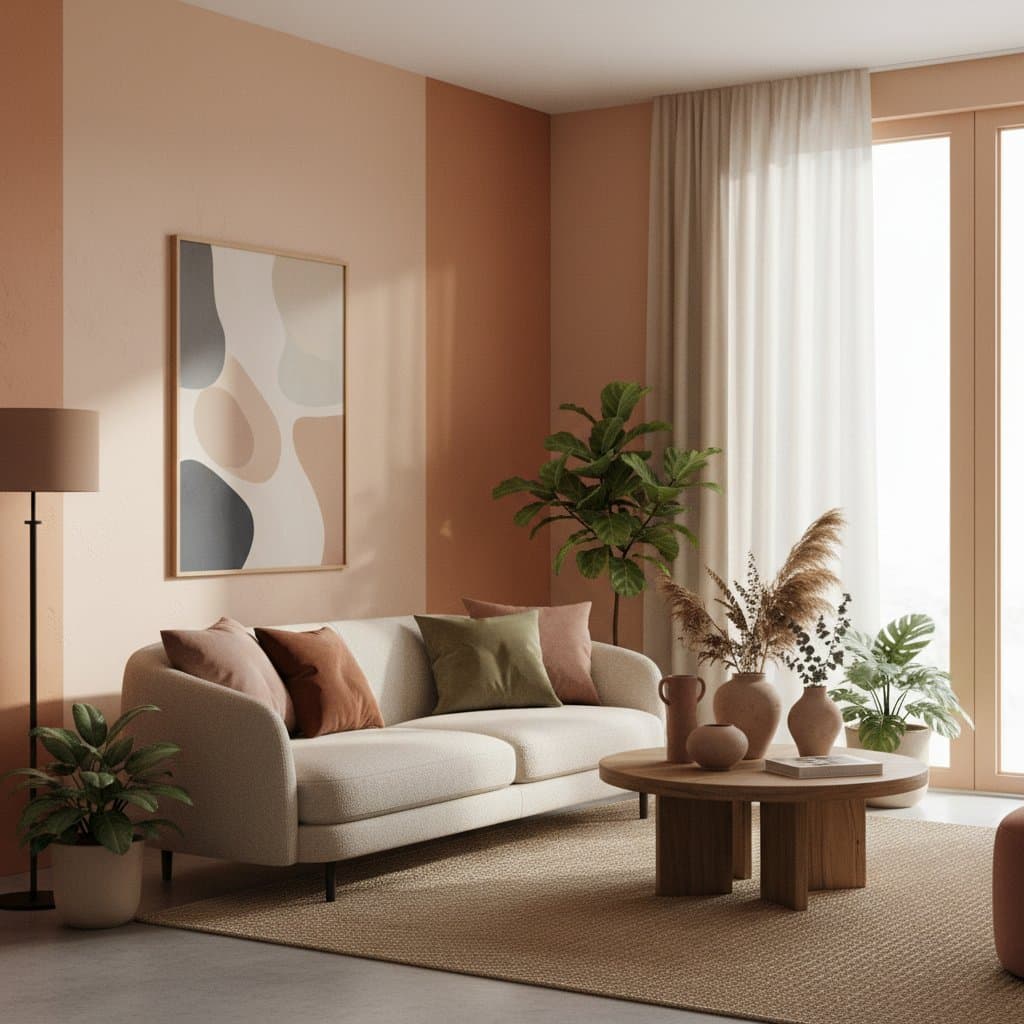
The trend extends beyond rustic aesthetics, integrating with contemporary lines and cool textures. For instance, a concrete floor paired with a clay-colored wall achieves balance between cool and warm, rough and smooth. Incorporating greenery transforms the space into a personal oasis.
Incorporating Biophilic Terracotta
Practical application of this trend accommodates various budgets and scales.
Low Budget Options:
- Apply a DIY clay-based or limewash paint to one accent wall.
- Repurpose terracotta pots with matching paint for unified accents.
- Introduce textiles such as throw pillows or curtains in complementary tones.
Mid Budget Options:
- Paint several walls in soft clay or peach terracotta to illuminate the room.
- Incorporate rattan or walnut furniture to reinforce the palette.
- Install natural fiber rugs to anchor the design.
High Budget Options:
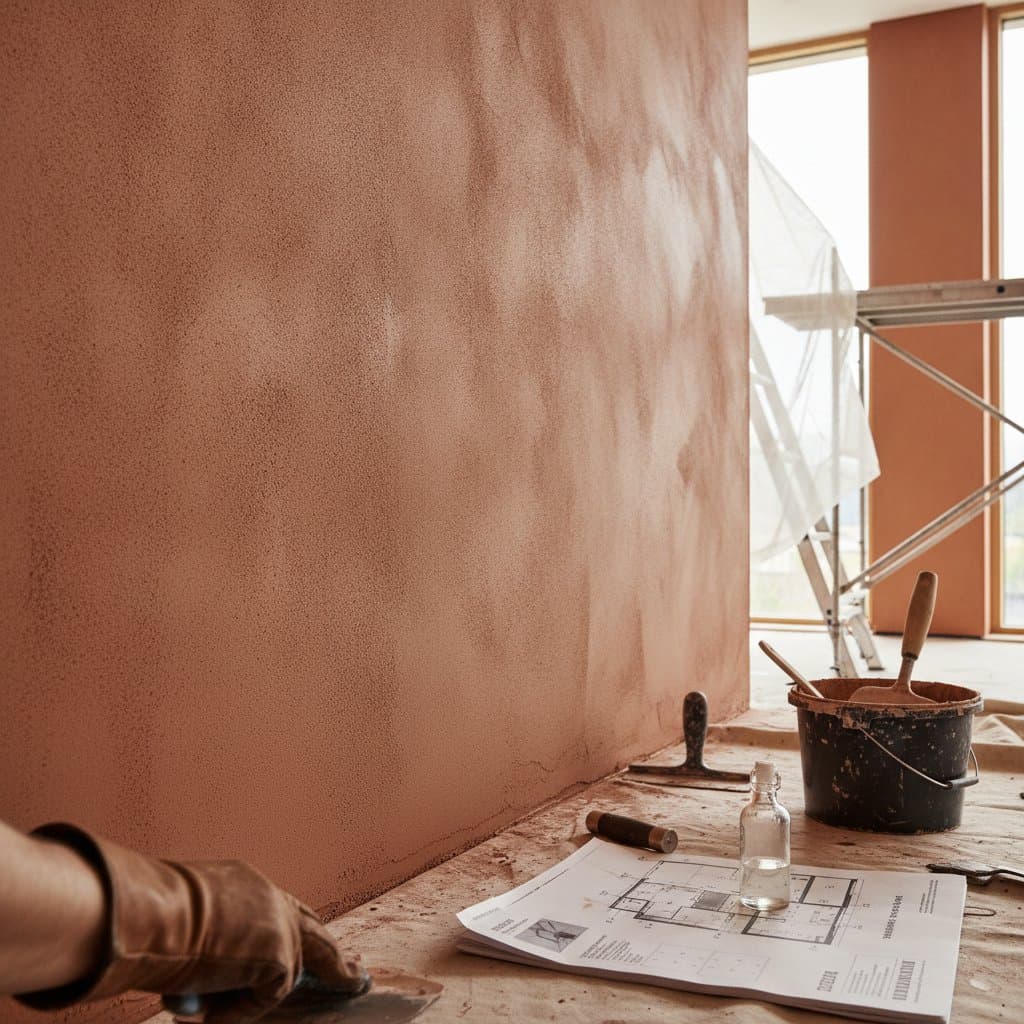
- Engage a plaster artisan for a custom textured terracotta finish.
- Combine with bespoke cabinetry in matte olive or warm white.
- Build in planters or living walls to amplify the biophilic elements.
Consistency in neutrals ensures harmony, positioning terracotta as the focal point.
Material and Finish Selections
Texture elevates terracotta tones significantly. Matte and low-sheen finishes diffuse light gently, replicating natural surfaces. These options outperform glossy paints in professional photography by concealing minor imperfections and avoiding artificial sheen.
Clay-based or mineral paints provide tactile authenticity. They permit vapor transmission, absorb light effectively, and offer minor humidity regulation, contributing to healthier interiors.
In high-traffic zones, opt for washable matte or eggshell finishes to maintain durability without compromising the soft aesthetic. Proper priming and full curing precede decoration or artwork installation.
Complementary Colors and Materials
Terracotta thrives alongside select companions that highlight its qualities.
Recommended Pairings:
- Warm whites and creams for added softness.
- Deep greens for contrast and vitality.
- Bronze, brass, or black metal accents for structural definition.
- Natural stone or concrete for equilibrium.
In a recent project, an entryway in muted terracotta alongside a green slate floor evoked immediate tranquility. Visitors often describe such combinations as refreshing upon arrival.
Lighting and Visual Tips
Terracotta responds favorably to thoughtful illumination, reflecting warmth without harsh glare for a flattering effect. For photography or video, employ indirect lighting and steer clear of cool white bulbs. Warm LEDs or daylight enhance the color's appeal.
In low-light rooms, lighter terracotta variants preserve openness and brightness. Deeper shades suit sunlit areas, fostering coziness. Lighting fundamentally alters perception, extending beyond initial paint chip impressions.
Maintenance Strategies
A properly applied terracotta finish matures elegantly over time. Natural pigments ensure even, subtle fading. Preserve vibrancy by dusting with a soft cloth and spot-cleaning with mild soap solutions. Harsh chemicals diminish color depth and should be avoided.
Refreshing typically requires one additional coat to revive richness. Terracotta's forgiving nature reduces the frequency of touch-ups compared to brighter whites.
Opportunities for Professionals
This trend presents avenues for paint manufacturers and designers. Companies now offer expanded clay-based and low-VOC lines, with simplified custom mixing for broad accessibility.
Product developers in furniture, textiles, or ceramics benefit from incorporating terracotta palettes. These colors perform well in visuals, adapt across seasons, and resonate emotionally for sustained relevance.
Evolving with Biophilic Terracotta
Biophilic terracotta adapts dynamically to daily light shifts, altering the ambiance from soft mornings to serene evenings. Layering with natural textures, artwork, and plants amplifies this vitality.
Accessible implementation begins with modest experiments, relying on personal intuition. Each painted surface cultivates a living space that nurtures well-being and joy, embodying effective design principles.