How to Save $2,700 on Popcorn Ceiling Removal: DIY Versus Professional Services
Popcorn ceilings defined mid-century interiors, yet contemporary tastes favor smooth surfaces. Removal updates rooms, improves light diffusion, and elevates property worth. Homeowners face a choice between self-managed projects and expert intervention, influenced by budget, schedule, and expertise. Grasping cost elements and procedural details empowers informed selections that balance economy and outcome.
The Popcorn Ceiling Removal Process
Popcorn ceiling removal extends beyond simple scraping. It demands thorough preparation, dust management, protective protocols, and drywall restoration. Start by sampling for asbestos presence. Upon confirmation of safety, apply water to loosen the texture, then remove it methodically. Follow with patching imperfections, sanding irregularities, and applying primer for a seamless base.
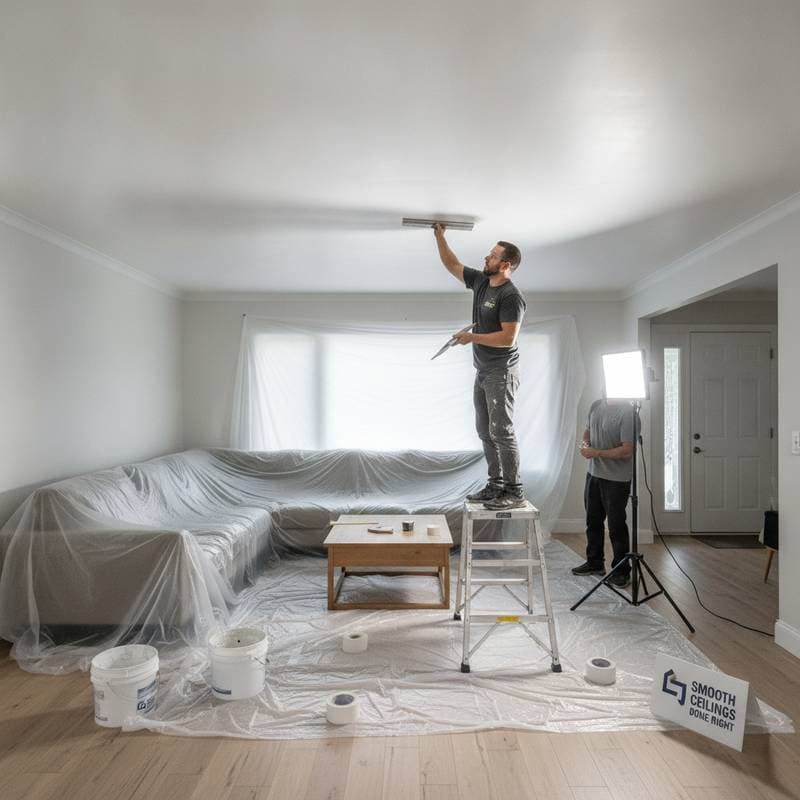
Experts deploy advanced equipment and barriers to limit disruption and achieve uniformity. Individuals undertaking the task independently replicate these measures using basic implements, necessitating meticulous planning and endurance.
Detailed Cost Analysis
Typical Price Ranges
- Simple jobs: $1,200 to $2,000
- Routine jobs: $2,000 to $3,500
- Complex jobs: $3,500 to $5,000
These figures cover complete removal and refinishing for standard residential spaces. Professionals charge approximately $2 to $3 per square foot nationally, whereas DIY outlays range from $0.50 to $1.50 per square foot, varying with supply choices.
Standard Inclusions
- Scraping labor and texture elimination
- Sheeting and cloths for containment
- Drywall mending and leveling
- Primer application and topcoats
- Debris clearance and disposal
Additional Charges
- Asbestos evaluation and remediation
- Custom painting or texturing outside basics
- Scaffolding for tall ceilings
- Furniture relocation or shielding
- Fixes for leaks or structural flaws
Influences on Total Expenses
| Factor | Impact on Cost | Specific Instances |
|---|---|---|
| Area Size | Expands labor and supplies proportionally | Expansive kitchens or vaulted living rooms |
| Height | Demands access equipment | Sloped or high-arched designs |
| Drywall State | Escalates repair needs | Stains from moisture, fissures, or rough patches |
| Toxic Elements | Inflates safety protocols | Pre-1980s installations with regulated substances |
| Finish Type | Prolongs labor for precision | Flawless Level 5 or ornate applications |
Hidden Expenses in DIY Approaches
Self-directed removal seems economical at first glance. Supplies might total $150 to $400, far below professional fees. However, unforeseen outlays emerge in setup and remediation phases.
Typical DIY outlays encompass:
- Sheeting, adhesives, and respirators for particle control
- Scraping devices, moisture applicators, and abrasives
- Patching compounds and primers for corrections
- Coatings, applicators, and extension tools for completion
Time commitment compounds the burden. Novices require two to three days per room, contrasting with expert efficiency. Errors like surface gouges demand extra mending, nullifying initial economies. Inadequate barriers permit dust infiltration into airways and upholstery, prolonging sanitation and posing respiratory concerns.
Scenarios Favoring Professional Services
Engage specialists when precision, security, and speed take priority. They evaluate material makeup, screen for dangers, and execute with limited interference. Such teams manage corrections and finalization for enduring aesthetics.
Advantages of expert removal:
- Accredited hazard detection and neutralization
- Dust suppression via high-capacity filtration
- Uniform surface preparation
- Accelerated completion by skilled groups
- Assurances against defects
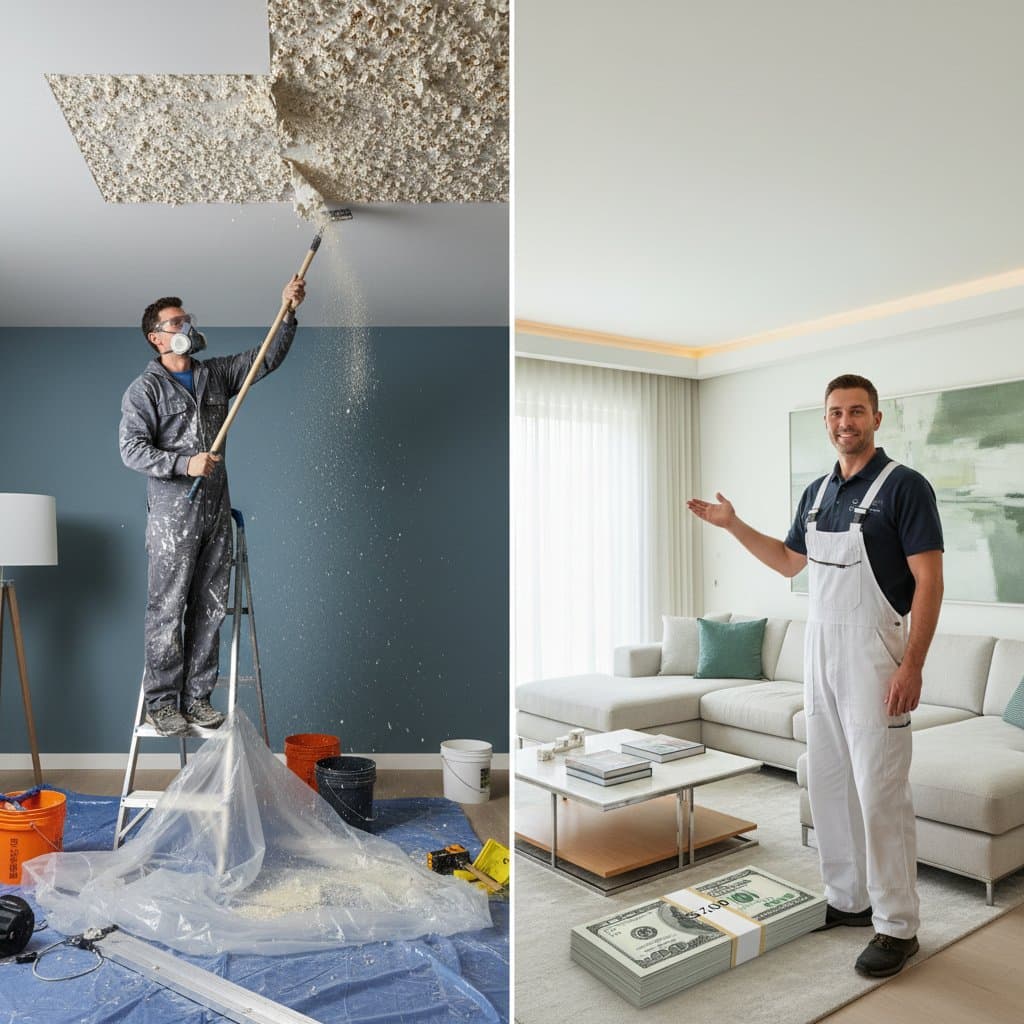
Opting for professionals often averts future interventions or refreshes. Homeowners typically realize $2,700 in sustained savings through error avoidance and superior execution from the outset.
Project Duration Overview
Expert Timelines
Professionals finish:
- Compact spaces (up to 150 square feet): One day
- Mid-sized zones (150 to 400 square feet): Two days
- Full residences: Three to five days
Schedules incorporate setup, extraction, amendment, and sealing. Subsequent sanitation and coloration render areas habitable promptly.
Self-Managed Timelines
Solo efforts span:
- Compact spaces: Two to three days
- Mid-sized zones: Four to six days
- Full residences: One to two weeks
Interruptions arise from repairs or daily routines.
Comparing Professional and DIY Methods
Required Competencies
The task calls for steady technique and deliberate action. Experts leverage pressurized applicators and automated sanders for rapidity and refinement. Amateurs employ hand methods that prove laborious and taxing.
Effort Demands
Independent work consumes entire workdays. Minor lapses extend patching durations. Teams segment responsibilities for streamlined progress.
Essential Gear
Specialists utilize heavy-duty extractors, elevated platforms, and filtered grinders. Renters face fees and assembly challenges.
Risk Management
Particulates threaten respiratory and visual health. Pros don full protections and deploy purifiers. Individuals need rated masks, shields, and suits.
Outcome Standards
Expert results feature invisible seams and even sheens. Amateur efforts reveal inconsistencies under scrutiny.
Expense Summary
DIY spectrum: $150 to $600 in materials
Expert spectrum: $1,800 to $4,500 for standard areas
Initial DIY gains diminish against remedial or oversight expenses.
Selecting and Engaging Contractors
The ideal hire transforms the endeavor into a seamless affair. Adhere to these protocols for reliability and safeguard.
Due Diligence
- Confirm regional credentials
- Validate protections for accidents and injuries
- Examine digital feedback and client endorsements
Bid Evaluation
- Solicit three detailed proposals
- Demand segmented listings of efforts, goods, and closures
- Probe sanitation and waste handling
Agreements and Dialogue
- Establish timelines in writing
- Mandate contracts delineating range and remittances
- Inquire on guarantees for execution
Warning Signs
Steer clear of providers who:
- Propose bargain rates sans rationale
- Insist on advance full settlement
- Omit proof of history or safeguards
Project Preparation Steps
Prior to commencement:
- Relocate or shield furnishings with barriers.
- Deactivate air systems to block particle spread.
- Dismantle adornments, illuminants, and outlets.
- Arrange interim shifts for broad scopes.
Post-extraction, permit full drying prior to coloration. Examine under illumination for uniformity.
Post-Project Verification
Upon conclusion, survey from varied perspectives. Check for:
- Consistent leveling
- Neat borders at intersections
- No apparent joins or fills
- Thorough residue elimination
Address flaws via revisions before settling accounts. Credible firms provide defect protections.
Integrating Removal with Broader Updates
Pair removal with allied improvements for efficiency. Contract for extraction plus recoloring to consolidate efforts. Time wiring or fixture enhancements amid access, maximizing utility.
Frequently Asked Questions
How much does popcorn ceiling removal cost per square foot?
Professional services range from $2 to $3 per square foot, encompassing extraction, mending, and sealing. DIY materials cost $0.50 to $1.50 per square foot. Escalations occur with toxins, impairments, or intensive fixes.
How long does popcorn ceiling removal take?
Experts manage average rooms in one to two days, including finalization. Independent attempts extend to days or weeks based on scale and availability. Prep and curing phases contribute additionally.
Should I remove a popcorn ceiling myself or hire a professional?
Self-removal suits minor, hazard-free areas for those adept at physical tasks. Professionals excel in expansive, elevated, or pre-regulation structures, ensuring security, refinement, and sanitation.
What should I look for when hiring a contractor?
Prioritize certified, covered experts with solid testimonials. Secure detailed quotes, affirm protections, and detail contracts covering waste and supplies. Shun ambiguities or oral pacts.
What does the popcorn ceiling removal process include?
It involves safeguarding items, moistening and detaching texture, drywall amendment, abrasion, priming, and coating. Experts screen dangers and contain particulates. Final sanitation wraps the operation.
What are the most common problems during popcorn ceiling removal?
Issues encompass irregular detachment, concealed flaws, and dust escape. These prompt added expenditures or hazards if unchecked. Appropriate implements and protocols mitigate risks; experts navigate them adeptly.