Sanding vs Chemical Stripping: Choose the Right Paint Removal Method
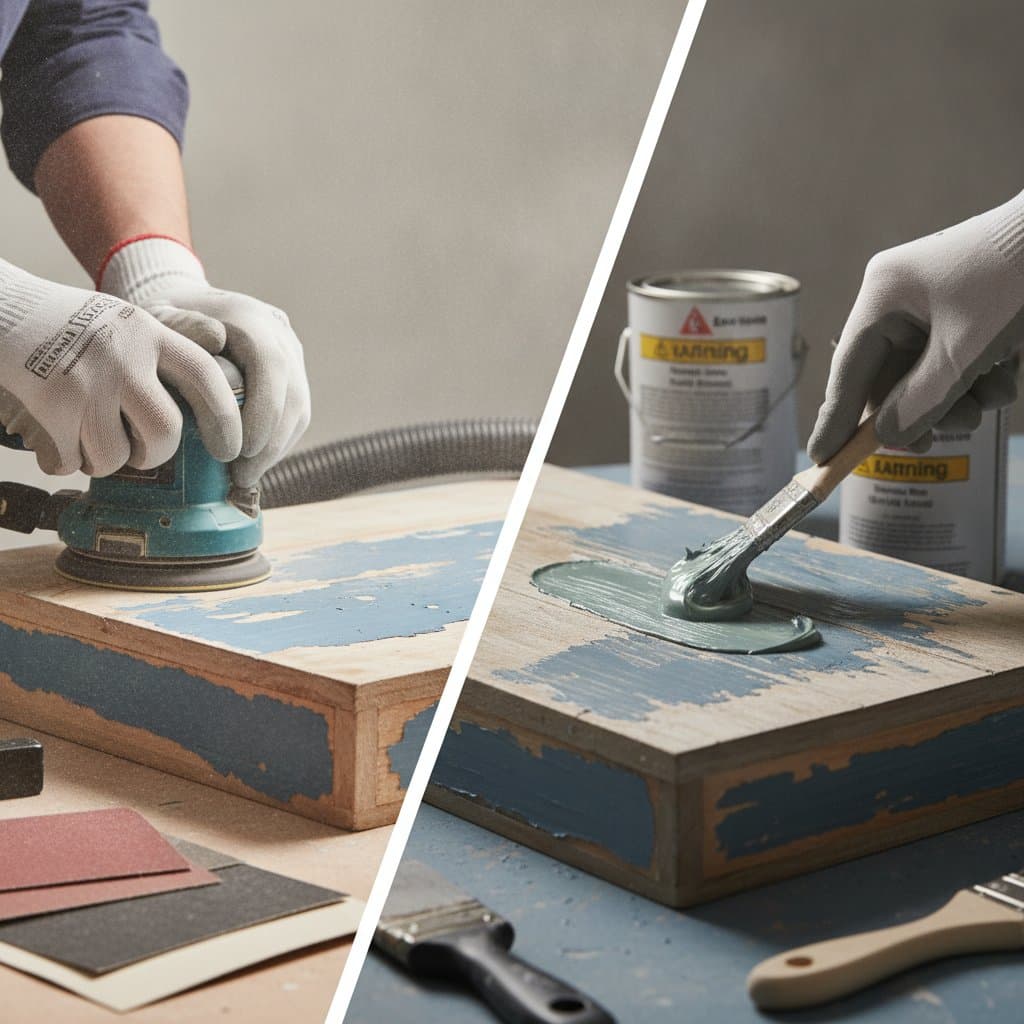
Removing old paint sets the foundation for a smooth and lasting finish on any surface. Sanding and chemical stripping represent the two main approaches used by both homeowners and professionals. Each option carries distinct costs, time requirements, and surface considerations that influence the final decision.
Paint Removal Cost Overview
Paint removal expenses typically range from 1.50 dollars to 5.00 dollars per square foot. Project totals for a standard room or small exterior area often fall between 300 dollars and 1,500 dollars. Sanding generally delivers results at a lower average cost than chemical methods.
Average Cost Ranges by Method
- Sanding: 1.50 dollars to 3.00 dollars per square foot
- Chemical strippers: 2.00 dollars to 5.00 dollars per square foot
Sanding requires more physical effort yet uses lower material expenses. Chemical strippers increase supply costs but reduce effort on intricate surfaces.
Cost Breakdown per Square Foot
| Cost Category | Sanding | Chemical Strippers | Key Notes |
|---|---|---|---|
| Materials | 0.30 dollars to 0.60 dollars | 1.00 dollar to 2.00 dollars | Sandpaper and abrasives versus chemical solutions |
| Labor | 1.00 dollar to 2.00 dollars | 1.50 dollars to 3.00 dollars | Manual sanding extends duration while stripping demands careful handling |
| Preparation | 0.20 dollar to 0.40 dollar | 0.30 dollar to 0.50 dollar | Surface protection and post-process cleanup |
Sanding costs approximately 40 percent less than chemical stripping across typical projects.
Factors Affecting Paint Removal Costs
Surface type determines method suitability. Wood accepts sanding readily, whereas metal and ornate trim respond better to chemical applications. Multiple paint layers extend labor time for either technique.
Access and detail level also matter. Flat walls allow straightforward sanding. Tight spaces and moldings benefit from gel strippers that reach recessed areas. Safety measures add another layer of planning. Chemical products require ventilation and protective equipment that increase overall project duration.
Comparing Sanding and Strippers
| Category | Sanding | Chemical Strippers |
|---|---|---|
| Speed | Slower on expansive surfaces | Faster on thick coatings and detailed work |
| Surface Finish | Removes paint while smoothing minor imperfections | Maintains fine details yet may require follow-up sanding |
| Cleanup | Generates dust that needs thorough vacuuming | Produces residue requiring specialized disposal |
| Best Use | Flat wood surfaces, floors, and furniture | Moldings, metal fixtures, and older paint layers |
Value and Long-Term Considerations
Sanding creates an ideal profile for primer adhesion and reduces future peeling risks. Chemical stripping preserves delicate profiles when applied correctly yet demands proper neutralization to avoid wood damage. The choice ultimately depends on matching the technique to surface conditions and project goals.
Money-Saving Strategies
Combine both methods by applying strippers only to detailed sections and sanding the remaining flat areas. Remove loose paint layers in advance to shorten professional labor time. Select biodegradable strippers when ventilation is limited. Rent orbital sanders or heat guns for one-time DIY projects to control equipment expenses.
Planning Your Budget
Reserve an additional 10 to 15 percent of the estimated total for unforeseen layers or surface repairs. Request detailed quotes that itemize material quantities, labor hours, and disposal procedures. Matching the removal method to the specific surface produces durable results and controls overall expenditure.
Frequently Asked Questions
When is the best time to start paint removal for the lowest costs?
Mild, dry weather reduces drying times and improves subsequent paint adhesion for both sanding and stripping projects.