Sand Finish: A $1,800 Upgrade for Replacing Flat Walls
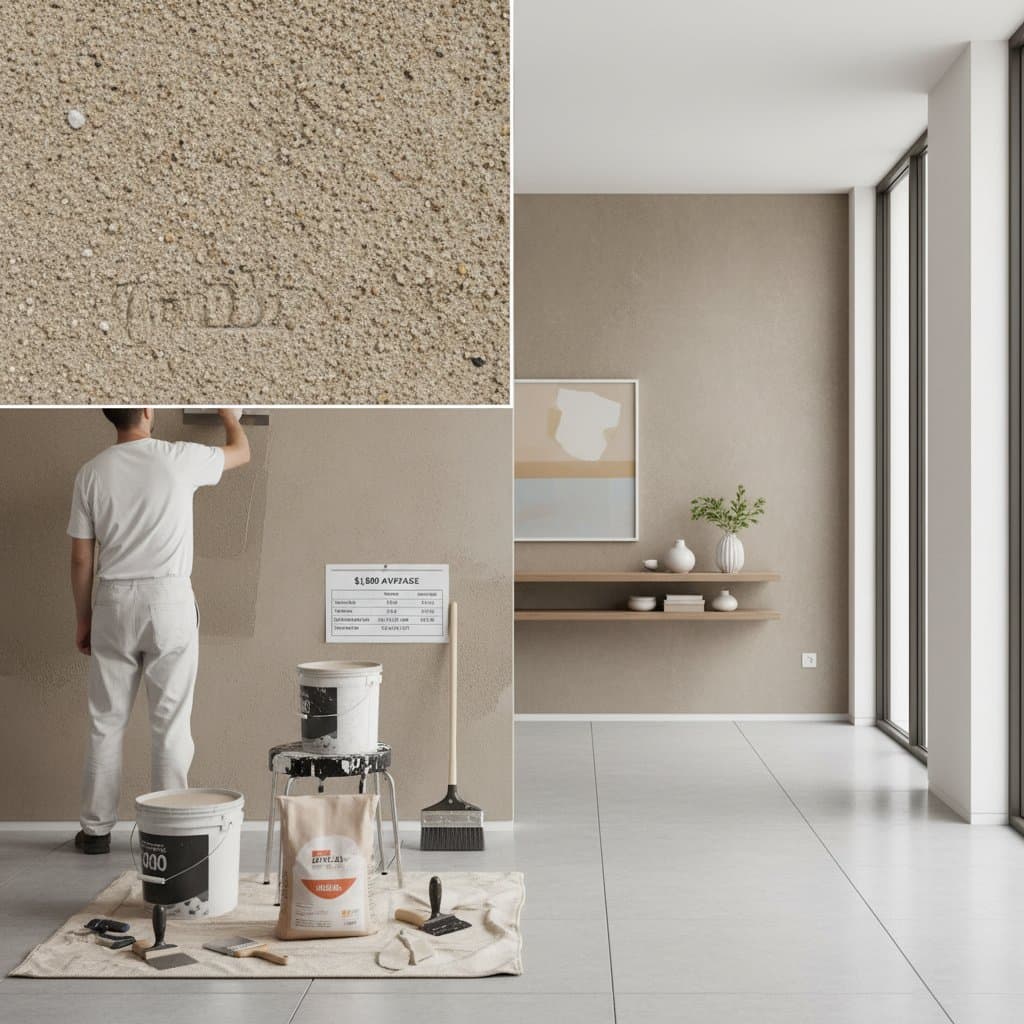
A sand finish applied to drywall creates a subtle textured surface that diffuses light effectively, conceals minor imperfections, and introduces depth to interior spaces. Homeowners frequently opt to replace smooth flat walls with this finish to boost durability and elevate the overall aesthetic. For an average-sized home, the project typically runs about $1,800, though expenses vary based on wall dimensions and existing conditions. Grasping the elements that drive these costs enables better project planning and alignment with your renovation objectives.
Average Cost Ranges by Project Size
- Small area (one room or accent wall): $400 to $800
- Medium project (several rooms): $1,200 to $1,800
- Whole-home upgrade (entire interior): $2,500 to $4,000
These estimates cover essential materials such as sanding compounds, along with labor for texture application. Final figures hinge on the extent of walls involved, necessary surface preparation, and the selected finish standard.
Cost Breakdown per Square Foot
Professionals charge $1.50 to $3.50 per square foot on average for a sand finish, encompassing:
- Materials: $0.50 to $1.00 per square foot
- Labor: $0.75 to $2.00 per square foot
- Preparation and cleanup: $0.25 to $0.50 per square foot
- Additional factors: $0.25 to $1.00 per square foot, accounting for repairs or primer applications
Such rates apply to standard drywall texturing by skilled applicators. Pursuing a do-it-yourself route might cut labor expenses, yet it demands specific tools and proficiency to produce a uniform result.
Factors Affecting Sand Finish Costs
Surface Preparation
Before texturing flat walls, teams must clean, patch holes, and apply primer. Dents, cracks, or uneven joints in the drywall can elevate preparation expenses by $100 to $400 for a standard room. Thorough groundwork guarantees even adhesion of the sand texture and prevents irregular patterns.
Material Type and Texture Density
Sand additives and texture compounds differ in cost and performance. Achieving uniformity with a fine sand finish demands greater material volume, whereas coarser variants use less but necessitate extra smoothing steps. Selecting a particular sand texture might increase costs by $0.25 to $0.75 per square foot.
Labor Complexity
Skilled application involves blending the texture seamlessly to eliminate visible seams. Rates climb for walls featuring numerous corners or elevated ceilings. Projects with intricate designs or detailed ceilings may raise labor expenses by 10 to 20 percent.
Paint and Topcoat Selection
The concluding paint coat significantly influences the visual outcome. Opting for premium paint with built-in primer adds $150 to $400, scaled to project size. Flat or eggshell sheens preserve the gentle texture, while satin or semi-gloss options accentuate its contours.
Regional and Seasonal Factors
Locations with elevated labor demand or scarce contractors push prices toward the higher spectrum. Arranging work in off-peak seasons frequently yields more competitive bids.
Detailed Cost Analysis by Finish Quality
| Finish Quality | Basic Range | Standard Range | Premium Range | Key Differences |
|---|---|---|---|---|
| Light Sand Texture | $1.25 - $2.00 | $2.00 - $3.00 | $3.00 - $3.75 | Subtle texture, smooth surface, minimal sanding |
| Medium Sand Texture | $1.50 - $2.50 | $2.50 - $3.25 | $3.25 - $4.00 | Balanced texture, hides flaws, suitable for most homes |
| Coarse Sand Texture | $1.75 - $2.75 | $2.75 - $3.50 | $3.50 - $4.25 | Pronounced texture, more coverage, rustic appearance |
Various finish tiers demand distinct quantities of joint compound, sand additives, and application time. Advanced options incorporate multiple layers, inter-coat sanding, and extended drying periods.
Value and Return on Investment
Swapping flat walls for a sand finish yields both visual and functional benefits. The texture masks minor flaws that smooth surfaces expose, thereby lowering long-term upkeep. It also fortifies walls against everyday wear, proving ideal for busy zones like corridors or family rooms.
In terms of resale value, this enhancement boosts interior warmth and personalization, particularly alongside new paint and trim updates. Many owners recover a portion of the outlay through heightened buyer interest.
Money-Saving Strategies
To control expenses while upholding standards, consider these approaches:
- Perform initial cleaning and minor hole repairs prior to contractor arrival, trimming labor time.
- Select medium textures for an elegant effect minus the premium for dense applications.
- Combine texturing with painting or repairs to access bundled pricing.
- Obtain bids from at least three qualified providers to pinpoint reasonable rates.
- Time the project for low-demand periods when contractors extend discounts.
Implementing these tactics often reduces overall costs by 10 to 25 percent.
Planning Your Budget
Effective budgeting for a sand finish begins with calculating total wall square footage. Multiply this by the projected per-square-foot rate to establish a foundation estimate. Incorporate a 10 to 15 percent buffer for unforeseen issues like repairs or extra layers.
For a representative home, this yields approximately $1,800, covering materials, labor, and final paint. Those pursuing upscale finishes or expansive scopes should expect elevated figures, offset by enduring quality.
DIY vs Professional Application
A do-it-yourself sand finish suits modest spaces if you possess drywall experience and access to tools like hawk boards, trowels, and sanders. Begin by mixing joint compound with silica sand, apply in thin layers, and sand lightly for smoothness; anticipate 4 to 6 hours per room plus drying time. However, inconsistencies arise easily without practice, potentially leading to rework.
Professionals excel in larger or challenging areas, ensuring flawless execution through specialized techniques and equipment. Their involvement minimizes errors, saves time, and provides warranties, justifying the added labor cost for superior, lasting outcomes.
Frequently Asked Questions
What is the average cost for a sand finish on interior walls?
Standard projects average $1,800 for interior applications. Rates span $1.50 to $3.50 per square foot, influenced by texture depth, wall state, and local labor.
What factors have the biggest impact on sand finish costs?
Key influencers encompass preparation needs, texture variety, application intricacy, paint choices, and geographic variations. Patching or priming requirements, along with high-end paints or complex geometries, notably inflate totals.
How can I save money on a sand finish without sacrificing quality?
Tackle basic preparations independently, opt for medium textures, and solicit multiple estimates. Off-season timing secures reduced rates, and integrating services like painting streamlines expenses.
Should I hire professionals or attempt this as a DIY project?
DIY fits experienced individuals on small scales, but professionals guarantee uniformity and efficiency for bigger jobs or heights. Their skills avert common pitfalls, delivering professional-grade durability.
How do I budget for unexpected costs in a sand finish project?
Build in a 10 to 15 percent reserve for surprises such as repairs or additional applications. Discuss potential extras with your contractor upfront to maintain control.
When is the best time to start a sand finish project for the lowest costs?
Off-peak months, when painting demand wanes, typically offer discounted rates and prompt availability. Advance planning synchronizes your timeline with favorable contractor conditions.
Achieving Lasting Interior Enhancement
A sand finish not only revitalizes flat walls but also fosters a resilient, inviting home environment. By weighing costs against benefits and applying smart planning, you secure a transformation that endures. This investment refines daily living while potentially elevating property value for years ahead.