Revitalizing Dated Popcorn Ceilings: The $800 Sand Finish Solution
Homeowners often seek ways to update ceilings without extensive renovations. The sand finish offers an effective solution for refreshing popcorn ceilings at a cost of around $800, depending on room size and regional labor rates. This texture provides a sophisticated appearance, conceals surface imperfections, and introduces subtle light reflection that surpasses flat paint finishes. The following sections explain the benefits, preparation, application, and outcomes of this approach, whether pursued through DIY efforts or professional services.
Reasons to Upgrade Popcorn Ceilings
Popcorn ceilings gained popularity for their straightforward installation and acoustic properties. However, contemporary preferences favor smoother surfaces, as the textured finish accumulates dust, diminishes light, and conveys an outdated aesthetic. Homeowners frequently express concerns about potential asbestos content in pre-1980s installations or lead-based elements in older coatings.
Even absent hazardous materials, popcorn textures prove challenging to maintain and repair. The sand finish addresses these issues by introducing a smooth, organic texture that appears artisanal and enduring. It diffuses light evenly, masks minor flaws, and complements diverse styles, from coastal motifs to modern farmhouse designs. Most importantly, this finish applies directly over existing popcorn without necessitating complete removal.
Understanding the Sand Finish Texture
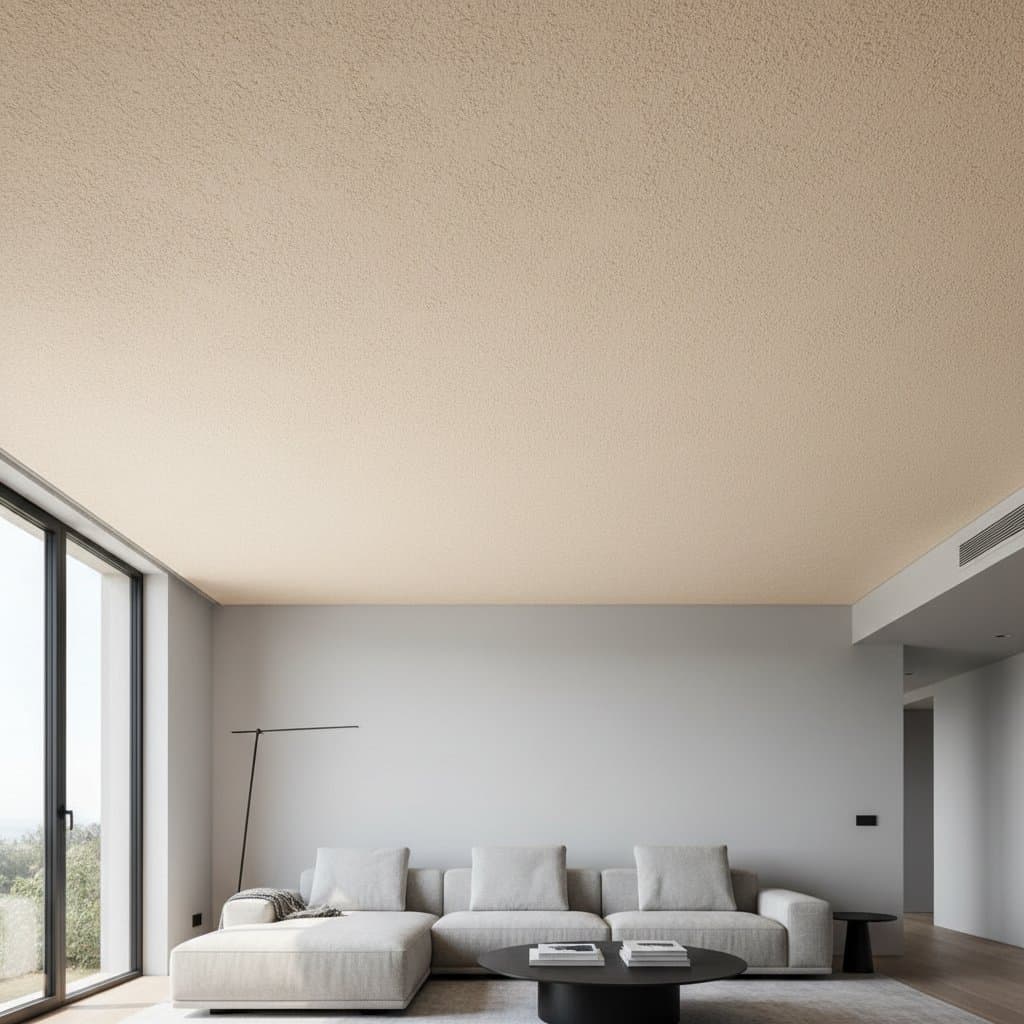
The sand finish incorporates fine silica or lightweight aggregates into drywall compound or specialized texture paint. Application via rolling or spraying yields a subtle granular surface resembling plaster or natural stone. This outcome creates an organic, premium, and serene effect, distinct from bolder textures like orange peel or knockdown.
Two primary variations exist:
- Fine sand finish, which produces a soft, velvety appearance ideal for bedrooms, dining rooms, and dimly lit areas.
- Coarse sand finish, featuring more pronounced grain suitable for high ceilings or spaces requiring added character and dimension.
Both options effectively cover minor dents and irregularities remaining after popcorn treatment. Homeowners achieve a contemporary ceiling without the expense of installing new drywall.
Breaking Down the $800 Cost
The process of removing popcorn and applying a sand finish typically costs $800 for a standard room. Factors such as ceiling height, surface condition, and local pricing influence the final amount, yet this remains significantly lower than full ceiling replacement.
Key components of the expense include:
- Labor: Professionals manage scraping, preparation, and texture application.
- Materials: Joint compound, silica sand, primer, and topcoat paint.
- Protection and cleanup: Masking adjacent surfaces, floor coverings, and dust mitigation.
Individuals with relevant skills can reduce costs by 50 percent or more through self-application, provided they possess appropriate tools and allocate sufficient time. Hiring experts ensures precision, making the investment worthwhile for a noticeable room enhancement.
Preparing Popcorn Ceilings Safely
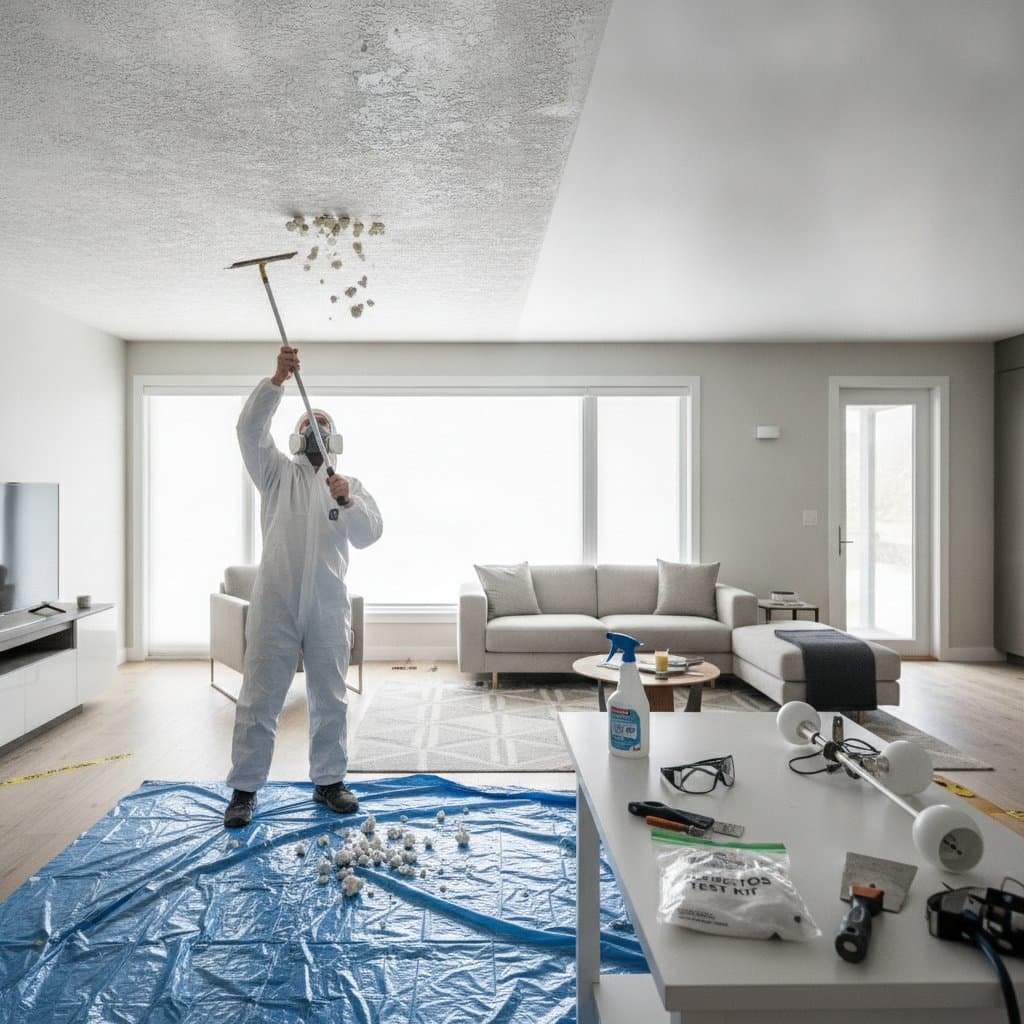
A stable, clean surface forms the foundation for any new finish. Testing for asbestos or lead requires professional certification if the home predates regulatory changes. Prioritize safety by engaging abatement specialists when uncertainty exists.
Upon confirming safety, proceed with these steps:
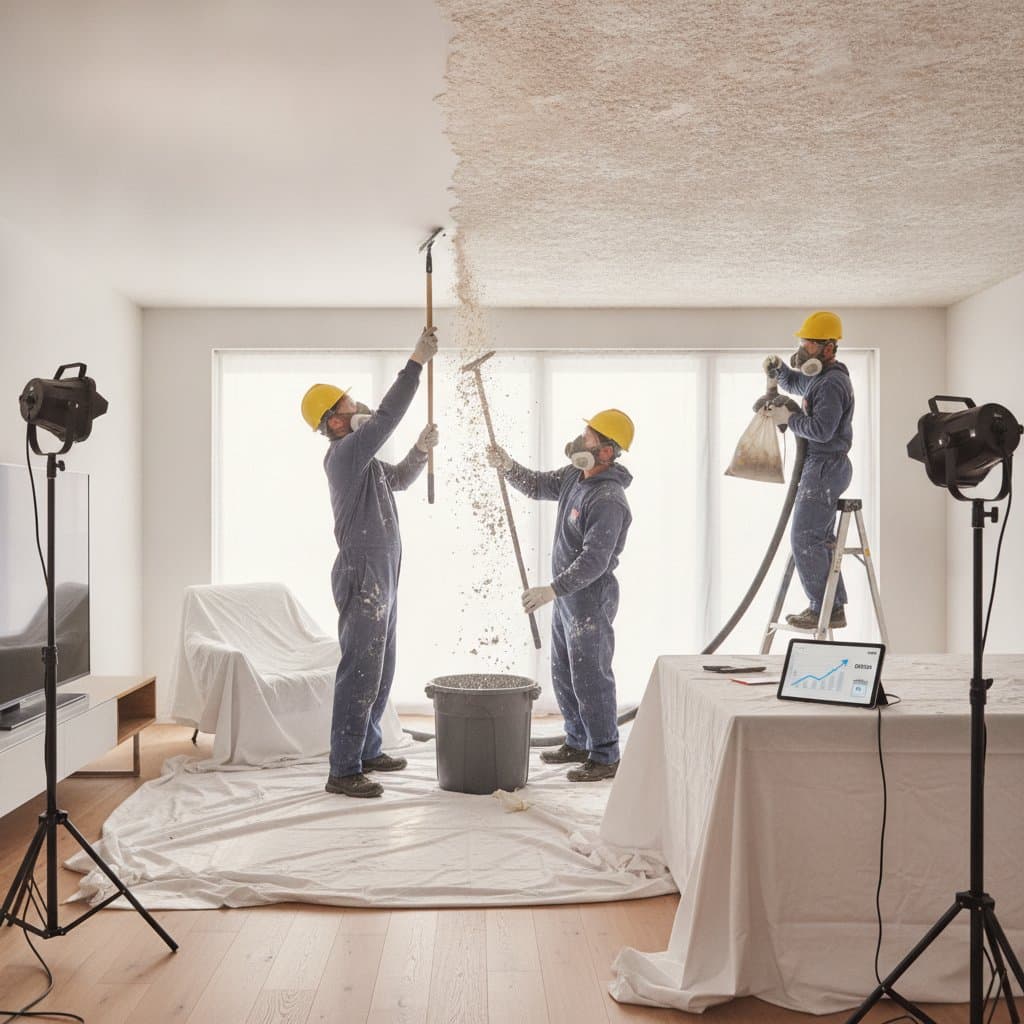
- Scrape or encapsulate: For loose or thick popcorn, mist with water and remove gently using a broad drywall knife. Stable layers may allow direct application of a bonding primer over the existing texture.
- Repair imperfections: Apply joint compound to cracks, nail holes, or depressions; sand smooth once dry.
- Apply primer: Select a product formulated for texture adhesion to seal dust and promote uniform bonding.
Examine the surface under bright illumination. Address any visible irregularities, such as shadowed protrusions or rough spots, to achieve a professional result.
Step-by-Step Sand Finish Application
Application demands consistent technique, whether rolling or spraying, to ensure even coverage.
- Prepare the mixture: Blend pre-mixed joint compound with water to a thick, paint-like consistency; incorporate fine sand or silica evenly to avoid lumps.
- Test application: Apply to a scrap piece of drywall or hidden ceiling area; allow drying to evaluate texture and grain.
- Protect surroundings: Mask walls, fixtures, and floors, as overspray can spread widely.
- Distribute evenly: Employ a heavy-nap roller or sprayer, working in overlapping passes to prevent visible seams.
- Blend edges: Lighten roller pressure at boundaries for seamless transitions.
- Dry and refine: Permit full drying, then lightly sand any prominent grains.
- Prime once more: A light coat secures the texture and prepares for painting.
- Finish with paint: Choose matte or eggshell ceiling paint to promote gentle light diffusion.
The completed surface exhibits a handcrafted quality that enhances the room's freshness.
Approaches for Different Budgets
Tailor the project to available resources and skill levels with these options.
DIY Under $300
Confident individuals can manage the task using basic tools like rollers and ladders. Materials such as silica sand, joint compound, primer, and paint total less than $150 for one room. Dedicate a weekend to application, focusing on even coverage under optimal lighting.
Professional Service at $800
Local painting or drywall contractors perform scraping, mixing, application, and cleanup for a single room. This yields uniform results and assurance of proper sealing and safety.
Premium Option from $1200
For expansive or elevated ceilings, or integrated upgrades like lighting, select comprehensive services. Professionals match paint to walls, update trim, and incorporate soundproofing, ideal for open layouts where ceilings draw attention.
Insights from Professional Set Design
Experience with production environments reveals ceilings' impact on spatial perception. Flat whites often appear stark under lighting, whereas sand finishes introduce depth to temper glare and improve color rendering.
For optimal home results, install diffused sources such as soft white LEDs or shaded fixtures. The texture's fine grains interact softly with light, fostering a warm yet polished ambiance.
Consider tinting ceiling paint slightly warmer than walls, two shades lighter, to promote harmony and perceived height.
Ensuring Durability and Maintenance
Sand texture excels in longevity, as its granular composition conceals minor repairs and resists flat-surface staining. The aggregates distribute tension evenly, reducing crack formation compared to smooth skim coats.
Maintain the finish by:
- Dusting periodically with a microfiber tool or vacuum extension.
- Cleaning spots with mild soap and water, avoiding abrasive methods.
- Repainting every few years via roller to restore vibrancy.
For repairs, sand the area lightly, apply matching texture, prime, and repaint for invisibility.
Recommended Materials
Select products for reliable performance in adhesion and application.
- Joint compound: USG All Purpose or Sheetrock Lightweight.
- Additives: Homax Silica Sand Texture or equivalent fine silica.
- Primer: Zinsser Bulls Eye 1-2-3 or Kilz Premium.
- Paint: Benjamin Moore Waterborne Ceiling Paint or Sherwin-Williams Eminence.
Verify product compatibility through small tests. Mix additives immediately before use to maintain suspension.
Managing Budget and Additional Expenses
Allocate a buffer beyond the $800 baseline for unforeseen needs like repairs or gear. Address issues such as water damage or sagging panels prior to texturing for sustained integrity.
Common extras encompass:
- Repairs: $100 to $200 for seam taping or patching.
- Paint enhancements: $50 to $100 for high-end formulas.
- Supplies: $20 to $50 for sheeting, tape, and cloths.
These increments keep total costs well below alternatives like drywall renewal or panel installations.
Enhancing Your Space Post-Upgrade
A completed sand finish ceiling brightens and soothes the environment through even light distribution and refined texture. This shift from popcorn coverage introduces a sense of renewal.
Complement the update with wall repainting, fixture replacements, or trim additions to amplify the effect. Such integrations underscore the texture's elegance and personalize the home.
Effective design prioritizes thoughtful enhancements that blend creativity with practicality, delivering spaces that reflect care and individuality.