Why Remove Popcorn Ceilings: A Smart Investment for Homeowners
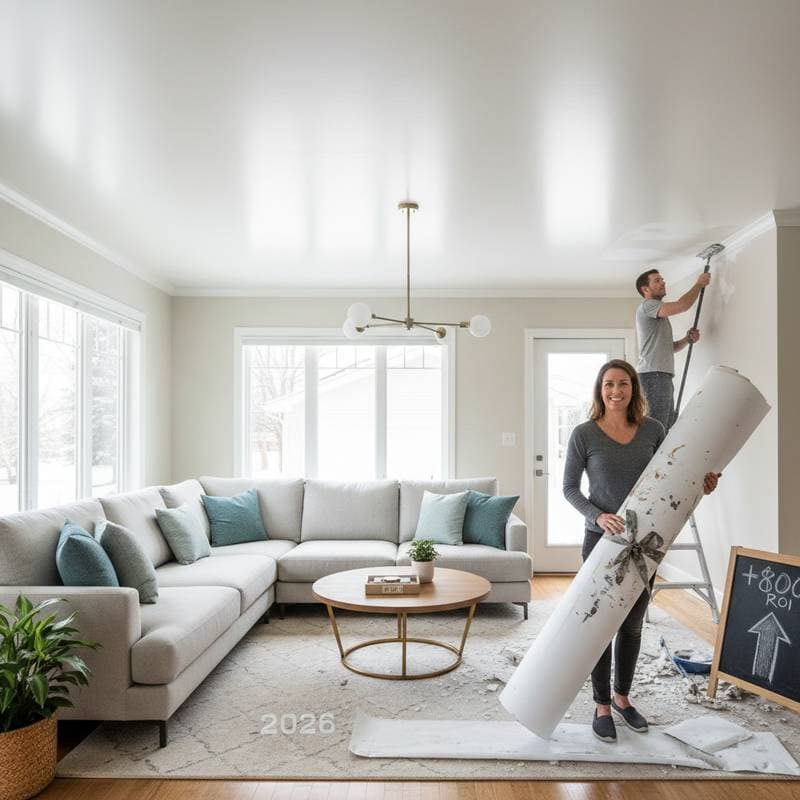
Popcorn ceilings emerged as a popular feature in mid-century homes, designed to conceal flaws and dampen sound. Today, however, these textured surfaces collect dust, diminish light, and convey an aged appearance. Homeowners who remove them achieve a refreshed interior that appeals to contemporary tastes. Studies from real estate experts indicate an average $800 return on investment, reflecting higher resale prices and quicker market times.
This transformation extends beyond financial gains. Smooth ceilings contribute to a sense of openness and cleanliness, improving daily living experiences. The process involves careful planning, but the results justify the effort for both immediate enjoyment and long-term equity.
Understanding the $800 Return on Investment
The $800 ROI arises from enhanced buyer perceptions and practical improvements. Prospective buyers associate flat ceilings with modern maintenance and updated design, often leading to offers $800 higher than comparable properties with textured ceilings. Real estate agents note that such homes sell 10 to 20 percent faster, reducing holding costs for sellers.
For those staying in their homes, benefits accumulate over time. Dust accumulation decreases significantly, easing cleaning routines and promoting better indoor air quality. Freshly painted smooth surfaces resist wear, extending the lifespan of finishes and reducing repaint frequency.
Consider a typical three-bedroom home: removing popcorn ceilings in key areas like the living room and kitchen can elevate the overall appraisal by highlighting structural integrity. This subtle upgrade signals quality craftsmanship to appraisers and visitors alike.
Design Advantages of Smooth Ceilings
Beyond monetary returns, smooth ceilings revolutionize room dynamics. They reflect light more effectively, creating an illusion of greater height and volume. In a standard 10-foot by 12-foot living room, this effect can make the space feel 15 percent larger, according to interior design principles.
Versatility increases with a flat surface. Apply a matte white paint for subtle brightness or a soft gray to complement minimalist decor. For open-plan areas, coordinate ceiling color with walls to blur boundaries and foster fluidity. Advanced options include subtle patterns via wallpaper or textured paints that add interest without overwhelming.
Lighting integration improves dramatically. Recessed cans or track systems distribute illumination evenly, eliminating shadows that textured ceilings exacerbate. This setup not only enhances functionality but also accentuates architectural details like crown molding.
Preparation and Safety Essentials
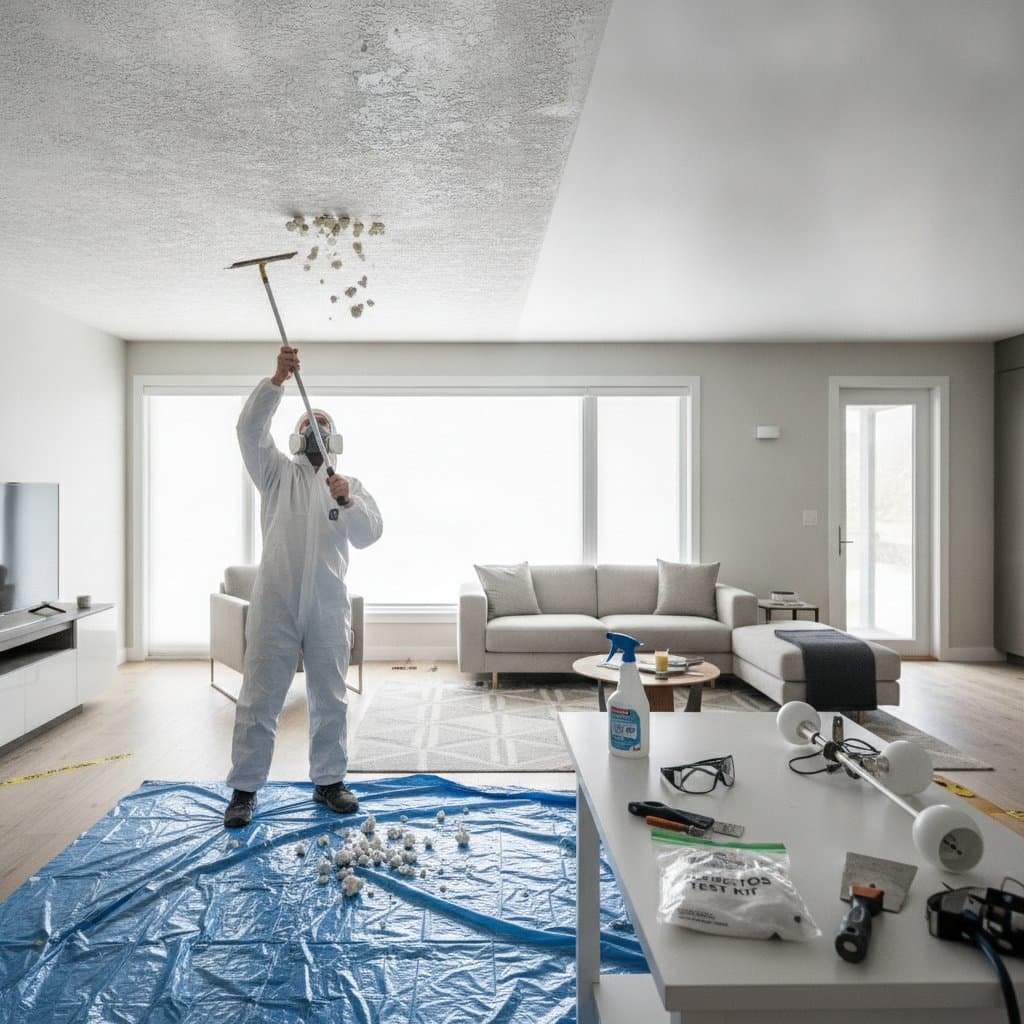
Safety forms the foundation of any ceiling removal project. Begin by testing for asbestos in homes built before 1980, as popcorn textures from that era may contain this hazardous material. Contact a certified inspector for sampling; results typically arrive within 48 hours. If asbestos is present, engage licensed abatement professionals to encapsulate or remove it safely.
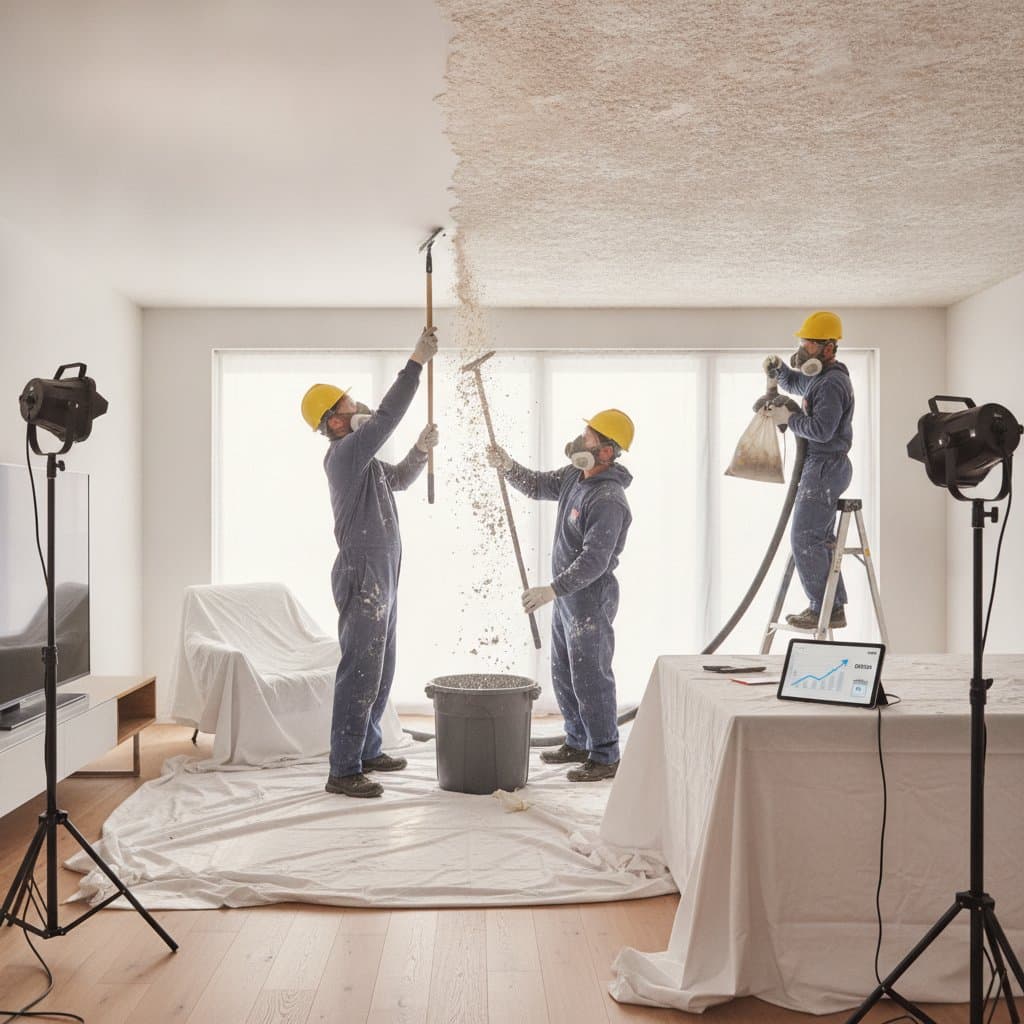
Prepare the workspace meticulously. Cover floors, furniture, and fixtures with heavy-duty plastic drop cloths, securing edges with painter's tape. Disable ceiling fans and seal HVAC vents with plastic and tape to minimize dust spread. Work in well-ventilated areas, wearing N95 masks, goggles, and gloves to protect against debris.
Assess ceiling condition beforehand. Check for water damage or loose sections that could complicate scraping. Use a flashlight to inspect joints and corners, noting areas requiring extra reinforcement with mesh tape and joint compound.
Materials and Tools for Effective Removal
Select materials that prioritize health and efficiency. Opt for low-VOC primers to seal the surface post-removal, reducing off-gassing in occupied homes. Zero-VOC latex paints in eggshell finish provide durability and easy wipe-downs. For smoothing, choose all-purpose joint compound over setting types for flexibility during sanding.
Essential tools include a 6-inch drywall knife for scraping, a wide putty knife for larger areas, and a sanding pole with 120-grit paper for even finishes. A spray bottle with water softens the texture for easier removal without excessive damage. Rent a shop vacuum with HEPA filter for dust control during the process.
Budget considerations vary: DIY kits cost $50 to $100 per room, while professional services range from $1 to $2 per square foot. Factor in primer and paint, adding $0.50 per square foot. These investments align with the projected ROI, ensuring cost-effective outcomes.
Step-by-Step Removal Process
Follow a structured approach to achieve professional results. First, score the ceiling with a utility knife along seams to prevent tearing drywall paper. Lightly mist sections with water using a garden sprayer, allowing 10 minutes for absorption.
Scrape gently with the drywall knife, working in 2-foot by 2-foot sections to avoid fatigue. Remove 90 percent of the texture, leaving a thin layer for easier patching. If chunks resist, apply more water or a texture softener solution.
Patch imperfections with joint compound, applying thin layers and feathering edges for seamless blending. Sand progressively from 80-grit to 220-grit, wiping dust between passes. Prime the surface, then apply two coats of paint with a 3/8-inch nap roller for optimal coverage.
For professional help, seek contractors experienced in textured ceiling work. Request references and verify licensing. They handle heavy lifting, ensuring compliance with local building codes.
Production-Inspired Techniques for Home Projects
Drawing from set design practices, prioritize visible impact in high-traffic areas first. Transform the entryway or main living space to build enthusiasm for further renovations. This staged method maintains household functionality while delivering quick wins.
Incorporate lighting tests during the process. Install temporary work lights to evaluate smoothness before final painting. Adjust based on natural light sources, such as south-facing windows, to maximize reflective qualities.
Time management proves crucial: allocate one weekend per room for DIY efforts. Professionals complete jobs in 2 to 4 days, depending on square footage. Track progress with before-and-after photos to appreciate the evolution.
Maintaining and Enhancing Your Smooth Ceilings
Post-removal care simplifies upkeep. Dust monthly with a microfiber extendable duster or vacuum brush to prevent buildup. Spot-clean stains with a mild soap solution and sponge, avoiding abrasive cleaners that dull finishes.
Enhance longevity through strategic upgrades. Install dimmable LED recessed lights to customize ambiance, or add cove lighting for a soft glow. These additions amplify the ceiling's role as a design element, sustaining the $800 value boost.
Ultimately, smooth ceilings foster serene environments that support well-being. They invite personalization, from seasonal color refreshes to integrated smart lighting. This enduring improvement rewards foresight with enhanced livability and market readiness.