Low-VOC Paints Increase Project Costs by 15 Percent
Homeowners planning interior painting projects encounter growing interest in low-VOC paints. These products deliver better indoor air quality and reduced chemical odors. They also raise total project expenses by roughly 15 percent. Clear understanding of the cost drivers supports effective planning and informed choices.
This guide explains the composition of low-VOC paints, identifies the sources of added expense, and outlines steps for selecting qualified contractors. It also provides practical preparation methods and evaluation criteria for finished work.
Definition and Composition
VOC refers to volatile organic compounds that evaporate during and after application. Conventional paints contain higher levels of these compounds. Low-VOC formulations replace petroleum solvents with water-based or plant-derived alternatives. The reformulation reduces emissions while requiring refined raw materials and additional processing steps.
Typical Project Costs
Cost Ranges for Full Interior Repainting
- Basic project: 3000 to 4200 dollars
- Standard project: 4500 to 6000 dollars
- Premium project: 6500 to 9000 dollars
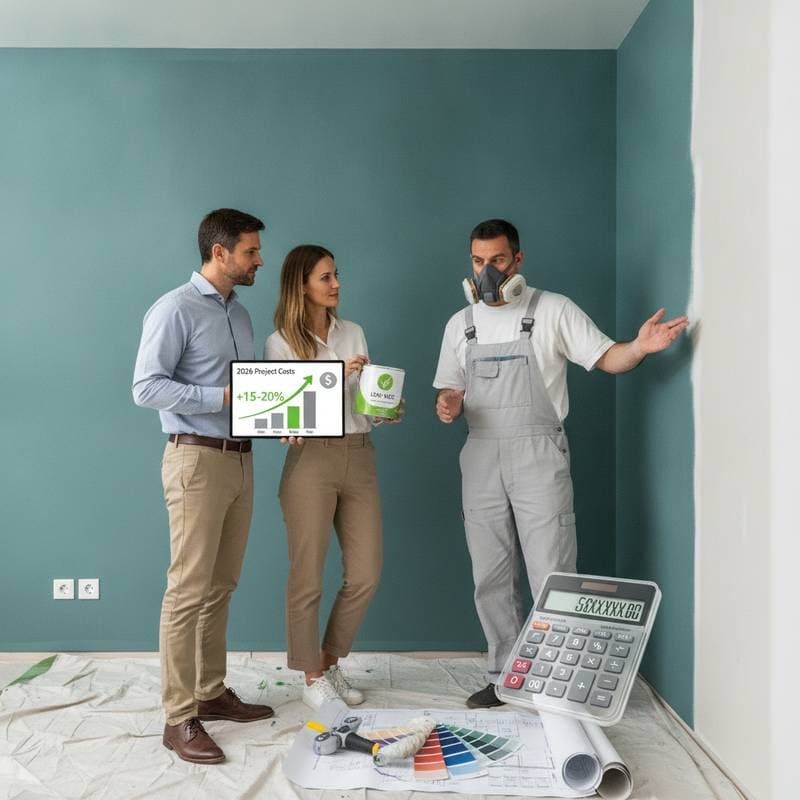
These ranges include labor, materials, and surface preparation for an average home. Low-VOC paints add approximately 15 percent to each range.
Standard Inclusions
Professional surface cleaning, patching, and sanding precede application. Two coats of low-VOC paint follow primer application when needed. Final cleanup includes proper disposal of waste materials.
Items That Increase the Total
Additional wall repairs, specialty finishes, accent walls, and cabinet work require separate line items. Each element extends both material and labor expenses.
Variables That Influence Price
| Factor | Typical Impact | Common Examples |
|---|---|---|
| Paint selection | Plus 10 to 20 percent | Premium certified brands |
| Surface condition | Plus 5 to 15 percent | Extensive patching required |
| Regional labor rates | Varies | Higher in dense urban markets |
| Color choice | Plus 5 percent | Deep tones needing extra coats |
| Access limitations | Plus 10 percent | High ceilings or confined spaces |
Sources of Higher Material and Labor Costs
Specialized binders and pigments undergo extra purification. Manufacturers invest in research to maintain durability and color retention. Certification testing for air-quality standards adds documentation expenses. Lower production volumes limit bulk discounts that conventional paints receive. Contractors may also require dedicated equipment suited to water-based products.
Project Schedule
Preparation occupies one to two days. Application of primer and first coat takes one day. The second coat and detailing require another day. Final drying and inspection extend one to two additional days. Low-VOC products sometimes need extended intervals between coats in humid conditions.
Decision Framework for Professional Service
Low-VOC paints can produce streaks when applied by inexperienced users. Professionals maintain consistent coverage and select compatible primers. Homeowners may handle small accent walls or furniture if they possess prior experience and follow manufacturer guidelines exactly.
Contractor Selection Process
Verify prior eco-friendly project experience through references. Confirm current licenses and insurance. Request itemized quotes that list specific paint brands and preparation steps. Discuss ventilation plans and drying expectations before work begins.
Homeowner Preparation Steps
Clear furniture from work areas and protect remaining surfaces. Complete minor repairs in advance. Select colors and finishes ahead of the start date. These actions allow contractors to focus on application rather than setup.
Performance and Maintenance
Properly applied low-VOC coatings resist fading and peeling at levels comparable to traditional paints. Gentle cleaning with mild soap preserves the finish. High-traffic zones may require periodic touch-ups.
Health and Environmental Advantages
Reduced off-gassing improves air quality for households with children or respiratory sensitivities. Lower chemical content also decreases environmental impact during manufacturing and disposal. Zero-VOC options exist at a further premium for projects with strict requirements.
Payment and Budget Management
Contractors typically request a deposit, a progress payment after the first coat, and final settlement upon approval. Include potential primer upgrades or color adjustments in the initial estimate. Financing programs through home-improvement lenders can spread payments when needed.
Final Inspection Criteria
Examine surfaces under both natural and artificial light for uniform color and smooth texture. Confirm cure by wiping a small area with a damp cloth. Retain brand names and color codes for future maintenance.
Project Planning Recommendations
Prioritize bedrooms and living areas for low-VOC application. Phase work by floor to limit disruption. Combine low-VOC paint in occupied spaces with standard paint in storage areas when budget constraints arise. This approach delivers measurable air-quality gains where daily exposure is highest.