$800 DIY vs $3,500 Professional: Cabinet Painting Breakdown
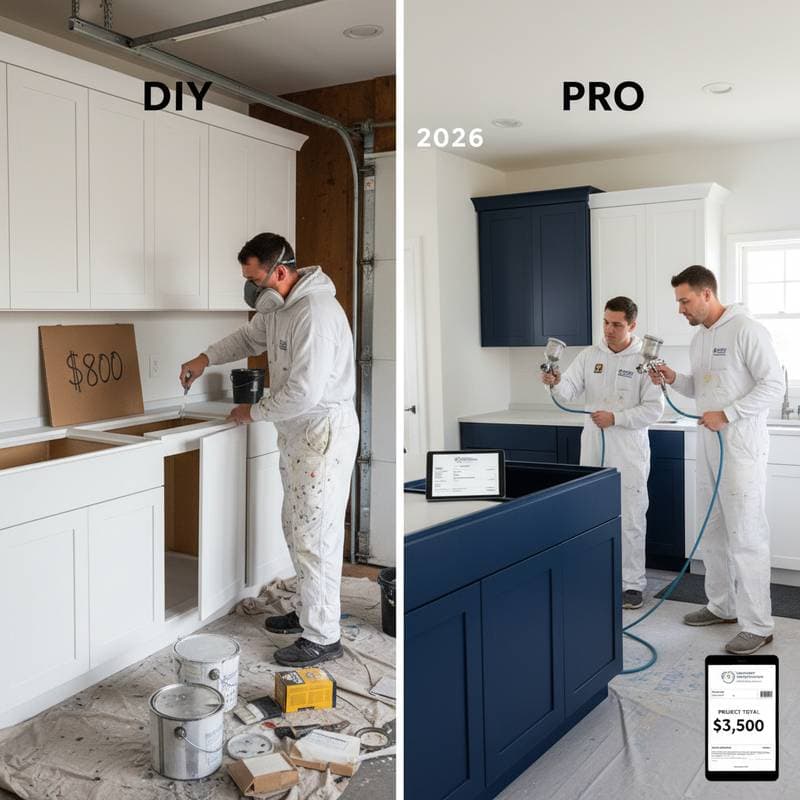
Repainting kitchen cabinets transforms a home's appearance without the need to replace existing structures. Homeowners often weigh the option of a DIY project costing approximately $800 against hiring professionals for around $3,500. These approaches differ significantly in expenses, duration, and expertise required. A clear understanding of each method enables informed decisions aligned with personal goals, financial limits, and skill levels.
Project Cost Breakdown
Average Cost Ranges
- DIY project: $600 to $1,000
- Professional standard project: $2,500 to $3,800
- Premium project: $4,000 to $5,500
What's Included
DIY expenses typically cover paint, primer, brushes, rollers, sandpaper, masking supplies, and possibly a sprayer rental. The homeowner supplies all labor for the project.
Professional fees encompass surface preparation, materials, equipment, protective coverings, labor, and cleanup. Services often include minor repairs to cabinets and reinstallation of hardware.
What Costs Extra
- Removal and reinstallation of cabinet doors along with new hardware
- Application of specialty finishes like glaze or two-tone designs
- Repairs for chipped veneer or damage from moisture
- Upgrades to premium paints or spray application techniques
Factors That Affect Final Cost
| Factor | Cost Impact | Examples |
|---|---|---|
| Cabinet size and layout | Higher material and labor costs | Expansive kitchens or additional islands |
| Paint type | Increases with superior quality | High-performance enamel for cabinets |
| Finish method | Adds expense for advanced techniques | Spraying for smooth, factory-like results |
| Prep condition | Elevates time and labor demands | Accumulated grease or existing peeling paint |
The DIY Experience
Undertaking cabinet painting independently saves substantial amounts, yet requires careful attention and accuracy. Homeowners dedicate multiple full days to tasks such as sanding, priming, painting, and reassembling doors. Errors frequently arise from inadequate preparation or substandard tools that produce noticeable imperfections.
Materials and tools essential for a DIY cabinet project consist of:
- Primer and cabinet-specific paint ($150 to $300)
- Brushes, rollers, trays, and tape ($75 to $150)
- Sandpaper or sander rental ($50 to $100)
- Drop cloths, cleaning solutions, and safety equipment ($50 to $75)
- Optional sprayer rental ($100 to $200)
The entire process may span a week or longer, factoring in drying periods and workspace organization. Numerous homeowners appreciate the achievement derived from completion, although finish quality fluctuates. Minor issues, including irregular layers or drips, occur regularly without access to professional tools.
The Professional Approach
Experienced cabinet painters employ advanced equipment and controlled settings to produce enduring, professional-grade results. Their rates account for both proficiency and streamlined operations. A team finishes an average kitchen in three to five business days, frequently handling door spraying in an off-site location to reduce household interruption.
What professionals provide includes:
- Industrial sprayers and ventilation setups for flawless applications
- Dust-controlled sanding and precise priming methods
- Commercial-grade paints formulated specifically for cabinets
- Accurate color coordination and protective topcoats
Completed work typically includes warranties against issues like peeling or discoloration for a defined duration. For individuals intending long-term residency or aiming to boost property value, professional results often yield greater returns compared to DIY efforts.
Comparing Time, Quality, and Results
| Category | DIY | Professional |
|---|---|---|
| Cost | Approximately $800 | Approximately $3,500 |
| Time | 5 to 10 days | 3 to 5 days |
| Skill required | Moderate to high | Managed by specialists |
| Finish quality | Variable outcomes | Uniform and refined |
| Durability | Solid with proper maintenance | Superior and extended lifespan |
A DIY effort suits smaller kitchens or constrained finances, yet professionals ensure dependable results with reduced effort. The selection hinges on the extent of time commitment desired and familiarity with intricate finishing procedures.
Preparation and Planning
Effective preparation sets the foundation for successful cabinet painting, whether pursued independently or through experts. Begin by evaluating cabinet condition: inspect for damage, grease accumulation, or loose hardware that demands attention before painting commences. Select paint colors and finishes that complement kitchen aesthetics, considering factors like lighting and adjacent surfaces for harmonious results.
Gather necessary supplies early to avoid delays. For DIY, organize a dedicated workspace with adequate ventilation and lighting. Professionals assess the site during initial consultations, providing tailored advice on timelines and potential challenges. Thorough planning minimizes disruptions and enhances overall project efficiency.
Weighing Options for Your Project
Determine the optimal path by balancing personal circumstances against project demands. Opt for DIY if budget constraints dominate and moderate skills align with a willingness to invest time; this approach fosters hands-on involvement and cost control. Choose professionals for complex repairs, premium finishes, or when efficiency takes priority, ensuring high-quality outcomes that elevate home appeal.
Consider long-term implications, such as resale potential or daily usability. Test small areas with sample paints to confirm choices before full commitment. Ultimately, align the decision with priorities that maximize satisfaction and value from the kitchen refresh.
Frequently Asked Questions
1. What affects the cost of cabinet painting the most?
The primary influences include cabinet dimensions, door quantity, and paint quality. Expansive kitchens and superior paints elevate material and labor expenses. Additional elements like specialty applications or necessary repairs further increase the overall amount.
2. How long does cabinet painting take?
Independent projects extend up to ten days, incorporating drying intervals. Professional teams complete the task in three to five days, benefiting from specialized tools and multiple workers.
3. When should homeowners hire professionals instead of doing it themselves?
Engage experts for cabinet repairs, spray finishes, or limited schedules. DIY proves suitable for compact areas or when financial savings surpass the pursuit of flawless execution.
4. How can I choose a reliable cabinet painter?
Request evidence of licensing and insurance, review portfolios of past projects, and examine authenticated feedback. Obtain a minimum of three estimates, evaluating inclusions like preparation and warranty provisions.
5. What should I expect during a professional cabinet painting job?
Teams detach doors, cleanse surfaces, sand, prime, and apply multiple coats via spraying or brushing. They safeguard floors and counters, then reattach doors and hardware after full curing.
6. What are common problems with cabinet painting and how can they be avoided?
Challenges such as peeling, brush strokes, and inconsistent hues arise frequently. Thorough cleaning, priming, and quality paint usage avert most difficulties. Experts execute these phases with precision, while independent efforts require diligent preparation.