Sanding Costs Rise: Liquid Deglosser Saves $800 in Cabinet Painting Preparation
Refinishing cabinets refreshes a kitchen or bathroom without the expense of full replacement. Preparation often brings unforeseen costs, however. Traditional sanding, essential for paint adhesion, demands significant time and money. With increasing labor and material prices, efficient options gain popularity. Liquid deglosser stands out as a solution that lowers preparation expenses while preserving professional results.
Overview of Cabinet Painting Preparation Costs
Preparation for cabinet painting typically costs $500 to $1,200 for an average kitchen. This figure covers cleaning, sanding, dust removal, and priming. Professional sanding adds $300 to $800 more, based on cabinet size, complexity, and existing finish. Liquid deglosser substitutes for much of the sanding, reducing time and labor savings of several hundred dollars.
Cost Ranges by Cabinet Size
- Small kitchen (8–10 cabinets): $400 - $700
- Medium kitchen (12–18 cabinets): $700 - $1,200
- Large kitchen (20+ cabinets): $1,200 - $2,000
Cost Breakdown per Cabinet
Surface preparation averages $25 to $60 per cabinet, encompassing cleaning, sanding or deglossing, and priming.
- Materials: $5 - $15 per cabinet
- Labor: $20 - $45 per cabinet
- Preparation and repairs: $10 - $30 per cabinet
- Additional factors: $10 - $25 per cabinet for intricate designs or thick buildup
Factors Influencing Cabinet Painting Preparation Costs
Labor demands: Sanding requires intensive effort to remove old finishes, smooth surfaces, and clear dust. Professionals charge $40 to $70 per hour, escalating overall expenses rapidly.
Cabinet material and finish: Solid wood, laminate, and medium-density fiberboard demand varied techniques. Glossy or oil-based surfaces necessitate extra abrasion or chemicals for adhesion, increasing materials and time.
Accessibility and layout: Confined areas, corner units, or built-ins complicate even sanding. Deglossers ease access by applying via cloth or sponge, avoiding power tools.
Surface condition: Peeling paint, water damage, or grease accumulation extends preparation. Cleaning and repairs may add $100 to $300 to the project total.
Cost Analysis by Preparation Method
| Prep Method | Basic Range | Standard Range | Premium Range | Key Differences |
|---|---|---|---|---|
| Manual Sanding | $500 - $1,000 | $800 - $1,500 | $1,500 - $2,200 | Extensive labor, substantial dust, superior smoothness |
| Power Sanding | $600 - $1,200 | $1,000 - $1,800 | $1,800 - $2,500 | Quicker than manual, needs dust management and equipment |
| Liquid Deglosser | $250 - $700 | $500 - $1,000 | $900 - $1,500 | Little dust, accelerated process, reduced labor |
How Liquid Deglosser Lowers Costs
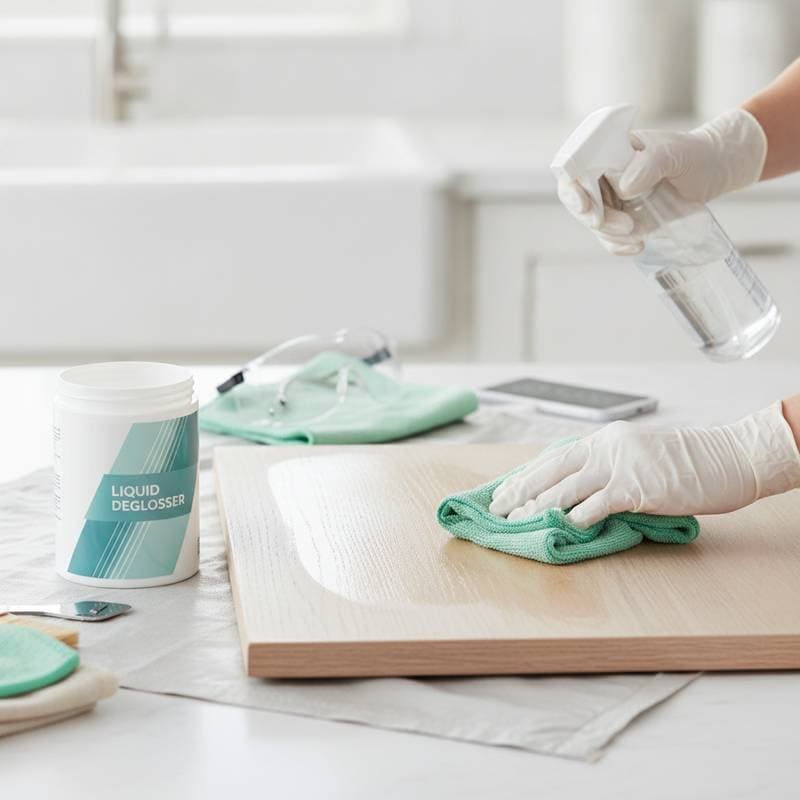
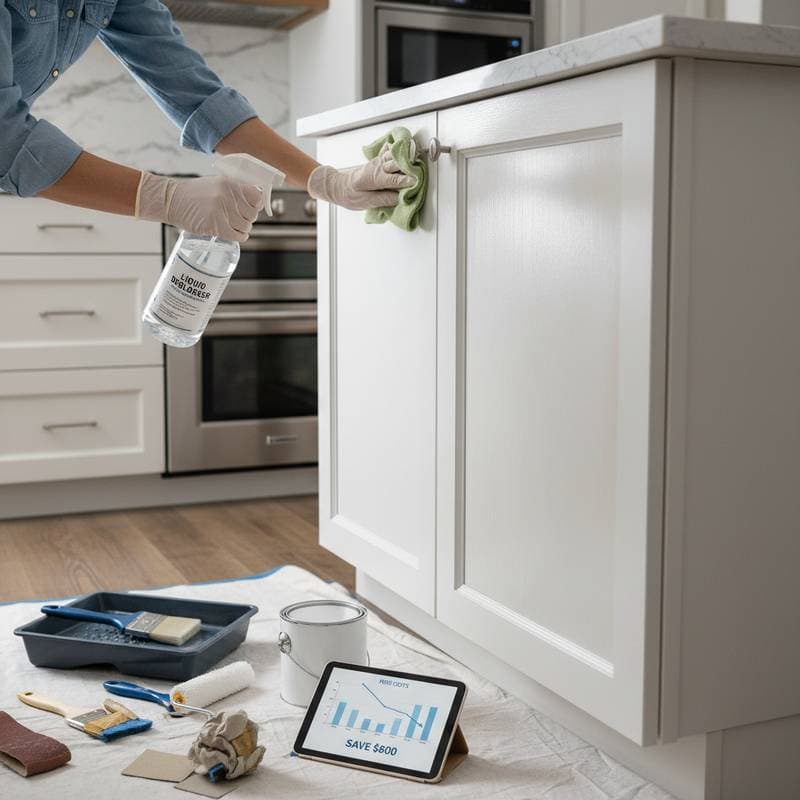
Liquid deglosser, known as liquid sandpaper, chemically breaks down glossy finishes without mechanical removal. It readies surfaces for primer and paint in less time. Apply the solution with a cloth, let it work, and wipe clean, bypassing exhaustive sanding. This method halves preparation duration, yielding labor savings of $300 to $800 for a complete kitchen.
Deglossers also minimize cleanup expenses. Sanding generates pervasive dust that demands thorough vacuuming and coverings. This alternative keeps spaces tidy and secure.
Assessing Value and Return on Investment
Cabinet painting provides strong returns among home upgrades. A quality finish enhances kitchen appeal and resale potential at lower cost than replacement. Opting for deglosser over sanding upholds standards while trimming preparation outlays.
Proper surface readiness promotes paint adhesion and longevity. When paired with suitable primers, deglossers match the durability of sanded surfaces. Expect comparable endurance and aesthetics at reduced expense.
Strategies to Reduce Cabinet Preparation Expenses
- Adopt a hybrid technique: Lightly sand damaged spots and use deglosser on intact areas to optimize cost and outcome.
- Perform initial cleaning: Remove grease before professional involvement to cut $100 to $200 in fees.
- Select compatible products: Choose deglossers that align with your primer and paint to avoid bonding problems.
- Time projects wisely: Contractors lower rates in off-season periods with reduced demand.
- Combine tasks: Engage one professional for cabinets, walls, and trim to secure volume discounts.
Comparison of Professional and DIY Approaches
| Approach | Total Cost Range | Labor Time | Expected Quality | Best For |
|---|---|---|---|---|
| DIY with Sanding | $300 - $800 | 20 - 40 hours | Moderate | Experienced individuals with tools |
| DIY with Deglosser | $200 - $600 | 10 - 20 hours | Good | Novices or cost-conscious efforts |
| Professional Sanding | $1,000 - $2,000 | 1 - 2 days | Excellent | Premium properties or ornate work |
| Professional Deglosser | $700 - $1,200 | 1 day | Excellent | Quality seekers balancing budget |
Building a Realistic Project Budget
Allocate funds across materials, labor, and contingencies. Factor in cabinet count and condition for accurate estimates. Consult contractors early to identify potential extras like hardware updates.
Choosing Effective Surface Preparation
Transitioning to liquid deglosser marks a shift toward efficient professional practices. Correct use creates a solid base for lasting paint application. Homeowners prioritizing savings alongside quality find this approach delivers substantial benefits.
Frequently Asked Questions
What is the average cost to prepare cabinets for painting?
Most projects range from $500 to $1,200, varying by size, configuration, and finish state. Substituting liquid deglosser for sanding reduces expenses by $300 to $800.
What factors most affect cabinet preparation costs?
Labor requirements, material types, surface issues, and access play key roles. Glossy coatings or accumulations extend effort, whereas straightforward setups prove faster and less costly.
How can I cut cabinet preparation costs while maintaining quality?
Select deglossers, manage preliminary cleaning independently, and solicit bids from multiple providers. Timing projects for low-demand seasons often secures better pricing.
Should I hire professionals or handle cabinet preparation myself?
DIY saves funds but demands skill and care. Experts achieve even results swiftly. For beginners, a deglosser-using professional combines affordability with reliable outcomes.
How do I account for unexpected expenses in cabinet painting?
Reserve 10 percent of the budget for repairs, replacements, or supplies. Review add-ons with your contractor upfront.
When should I launch a cabinet painting project to minimize costs?
Late winter through early spring sees lighter contractor schedules, leading to competitive rates. Advance planning locks in optimal terms and availability.