The Future of Painting: AI Reduces Waste by 35 Percent in 2026
The painting industry experiences a significant transformation as artificial intelligence tools redefine project planning, estimation, and execution. Traditional approaches frequently result in excess material purchases and substantial waste, which elevate costs and harm the environment. Artificial intelligence addresses these issues by enhancing accuracy and efficiency. Recent analyses indicate that AI-driven calculators and intelligent systems decrease material waste by approximately 35 percent, which benefits homeowners and contractors financially while advancing sustainable methods.
Understanding Artificial Intelligence in Painting
Artificial intelligence applications in painting emphasize predictive analytics, image recognition, and automated data handling. These technologies employ digital scans of surfaces, textures, and absorption rates to specify exact paint volumes. Rather than depending on manual measurements or simplistic equations, AI processes vast datasets for precise outcomes. Such accuracy minimizes surplus paint, lowers disposal requirements, and guarantees uniform application.
Artificial intelligence further supports color choices and finish selections. By evaluating ambient lighting, substrate materials, and client preferences, these tools propose optimal paint pairings that enhance performance and longevity. Consequently, clients report higher satisfaction, diminished waste, and streamlined workflows throughout the project lifecycle.
Average Cost Ranges for Artificial Intelligence-Enhanced Painting Projects
Homeowners who incorporate AI tools into painting initiatives realize tangible financial advantages. Standard expenses vary based on room dimensions, surface states, and paint grades, yet AI refines projections and curbs excess expenditures.
- Small residential room: $300 to $700
- Medium-sized room: $700 to $1,500
- Large open area or multiple rooms: $1,500 to $3,000
These estimates encompass materials, labor, and preparatory work. Precise AI calculations for paint needs can lower overall project expenses by 10 to 20 percent through waste reduction and optimized labor allocation.
Cost Breakdown per Square Foot
Interior painting projects typically cost between $2 and $6 per square foot, covering:
- Materials: $1 to $2 per square foot
- Labor: $1 to $3 per square foot
- Preparation: $0.50 to $1 per square foot
- Technology and AI integration: $0.10 to $0.25 per square foot
The modest expense for AI implementation proves worthwhile, as savings from avoided overbuying and superior coverage efficiency quickly compensate.
Factors Affecting Painting Costs
Multiple elements shape painting expenses, even with AI optimizing waste management and material planning.
1. Room Size and Geometry
Expansive spaces demand greater paint volumes, and non-standard shapes add procedural challenges. AI evaluates intricate room layouts to compute surface areas accurately, thereby preventing inflated estimates.
2. Surface Condition
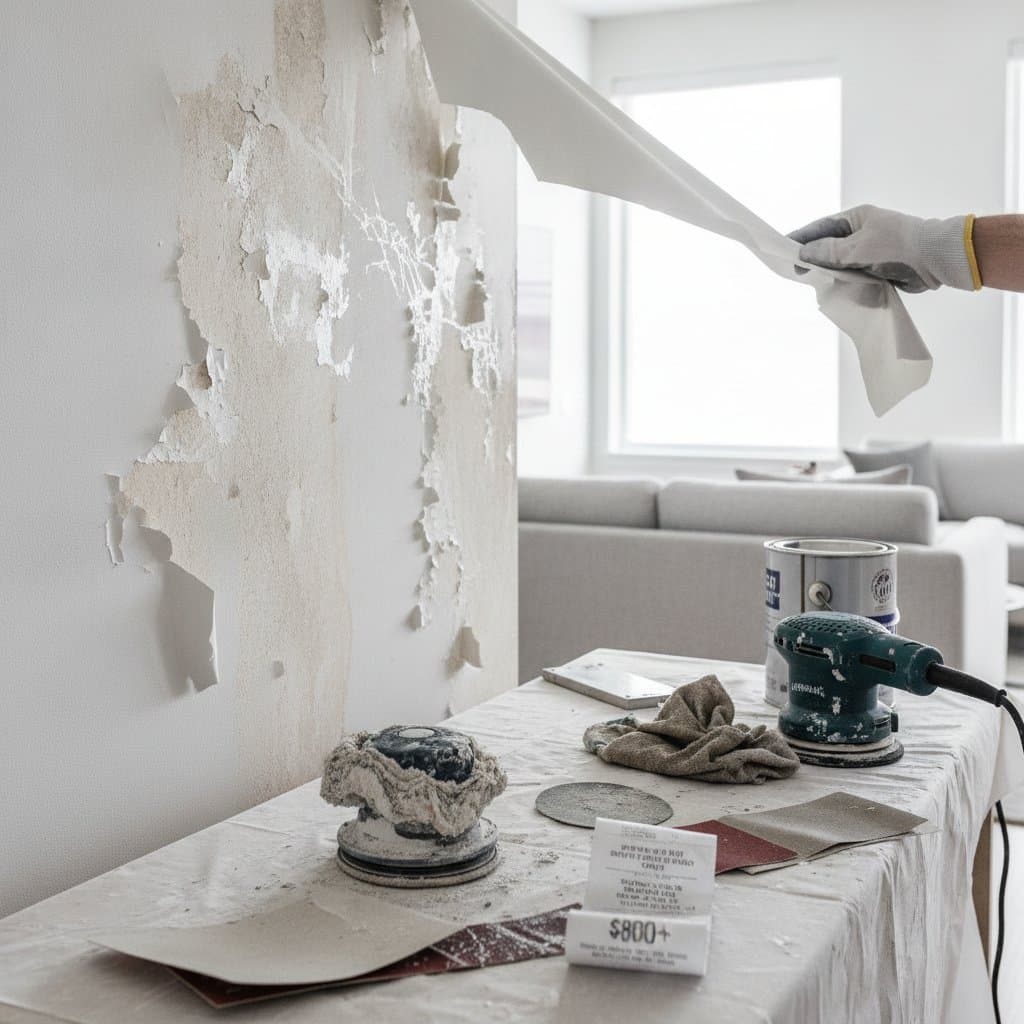
Damaged walls needing repairs, sanding, or priming raise preparatory outlays. AI-supported imaging identifies flaws and recommends remedies, enabling teams to allocate time and resources effectively.
3. Paint Quality and Finish
High-end paints incur higher prices but deliver superior coverage, resilience, and cleanability. AI tools account for absorption and spreading characteristics to align selections with surface demands, which curtails waste from excessive application.
4. Labor Efficiency
AI-driven scheduling refines team deployments and timelines, minimizing idle periods and boosting output. Enhanced coordination shortens labor duration and associated costs.
5. Regional Market Factors
Wage scales and supply prices fluctuate by location. AI platforms draw on localized information to tailor estimates, yielding realistic financial projections.
Detailed Cost Analysis by Category
| Category | Basic Range | Standard Range | Premium Range | Key Differences |
|---|---|---|---|---|
| Interior Walls | $2 - $3 per sq. ft. | $3 - $4.50 per sq. ft. | $4.50 - $6 per sq. ft. | Higher quality paints and finishes provide more durability |
| Exterior Surfaces | $2.50 - $4 per sq. ft. | $4 - $6 per sq. ft. | $6 - $8 per sq. ft. | Premium paints resist weathering and fading |
| Trim and Detail Work | $1.50 - $3 per linear ft. | $3 - $4.50 per linear ft. | $4.50 - $6 per linear ft. | Precision work increases labor time |
| Ceiling Painting | $1 - $2 per sq. ft. | $2 - $3 per sq. ft. | $3 - $4 per sq. ft. | Complex surfaces or textures raise costs |
AI enhances efficiency across these segments by sharpening forecasts and limiting material surpluses. Cumulative savings become evident in extensive undertakings, such as repainting several rooms or an entire residence.
How Artificial Intelligence Reduces Paint Waste
AI-based paint estimators utilize inputs from digital schematics, on-site photos, and live metrics. Algorithms assess wall elevations, fixture positions, and access points to pinpoint coverage areas precisely. They incorporate variables like paint formulations, primer necessities, and techniques to generate reliable quantity predictions.
This methodology counters habitual overordering. For example, a residence conventionally requiring 10 gallons may necessitate only seven or eight with AI guidance. These reductions conserve funds and avert the accumulation or disposal of unused supplies.
Moreover, AI facilitates stock oversight. Professionals link usage records to intelligent platforms that track depletion across assignments. Such monitoring averts redundant acquisitions and supports timely resupply.
Value and Long-Term Benefits
- Environmental Impact: Decreased waste translates to reduced chemical runoff and lessened manufacturing pressures.
- Cost Efficiency: Material conservation yields straightforward financial gains for clients and service providers.
- Durability: AI-guided selections for paints and applications promote enduring outcomes with infrequent maintenance.
- Time Savings: Automated planning curtails setbacks and refines operational sequences.
Money-Saving Strategies with Artificial Intelligence Tools
-
Employ AI Paint Calculators Prior to Buying
Enter precise dimensions and features to produce a targeted supply roster. -
Adopt System-Recommended Paints
These suggestions harmonize efficacy and affordability, avoiding extravagant options. -
Schedule Strategically
Leverage AI planners to align with painters during low-demand seasons for discounted rates on labor. -
Track Usage Actively
Observe consumption in real time to prevent waste during execution. -
Store Remnants Judiciously
AI logs residual amounts and expiration dates, facilitating reuse in subsequent repairs.
Planning Your Budget
Establish a comprehensive budget by starting withestimates for materials and labor. Allocate 10 percent as a buffer for contingencies like hidden defects. Review regional pricing trends through AI tools to secure competitive bids, ensuring your project remains within financial limits while maximizing AI-driven efficiencies.
Frequently Asked Questions
1. What is the average cost of an AI-assisted painting project?
Most homeowners allocate between $2 and $6 per square foot for projects incorporating AI. This covers materials, labor, and technological elements. The minor AI surcharge diminishes through waste avoidance and enhanced precision, often resulting in net reductions.
2. Which factors most affect painting project costs?
Dimensions, surface integrity, paint specifications, and workforce productivity dominate influences. AI mitigates these by delivering exact metrics, preempting issues, and streamlining timetables.
3. How can I save money using AI painting tools?
Apply AI estimators for meticulous procurement, heed advised paint varieties, and time projects for off-peak availability. These practices diminish surpluses and compress expenditures.
4. Should I rely on professionals or attempt an AI-guided DIY approach?
AI simplifies DIY by clarifying computations and selections, rendering it feasible for straightforward tasks. Professionals, however, offer expertise for flawless execution and expedited results. Opt for experts in sizable or intricate endeavors to achieve economical superiority.
5. How do I prepare my budget for unexpected costs?
Reserve approximately 10 percent of the total as a safeguard. AI precision minimizes surprises, yet allowances for repairs or anomalies maintain fiscal stability.
6. When is the best time to start a painting project for cost savings?
Initiate in spring or late fall, periods of subdued demand that yield favorable rates and scheduling. Pairing AI optimization during these windows amplifies material and labor economies.