Storm Damage: Paint or Replace Siding This Spring?
Storms inflict significant damage on a home's exterior. High winds and driving rain target siding first. After the weather passes, homeowners often discover peeling paint, warped panels, or cracks. The decision between painting and replacement requires careful evaluation to protect the home and manage costs effectively.
Assess the Damage Thoroughly
Examine the exterior systematically before proceeding with repairs. Identify specific indicators of harm to determine the appropriate response.
- Peeling or bubbling paint suggests moisture trapped under the surface.
- Warped or buckled panels point to water infiltration or thermal expansion.
- Soft spots or rot indicate material degradation.
- Cracked or missing sections leave the structure vulnerable to further elements.
Surface-level issues may respond well to painting. Structural weaknesses, such as sponginess or brittleness, necessitate replacement for long-term durability.
Test panels by tapping them lightly with a screwdriver handle. Hollow or dull sounds reveal potential internal decay, providing clarity without extensive disassembly.
Compare Painting and Replacement Options
Scenarios for Painting
Painting suits siding that remains structurally intact. Cosmetic damage alone allows a new coat to restore protection and appearance.
Suitable materials include:
- Solid wood with minimal cracking.
- Fiber cement with undamaged edges.
- Metal without perforation from corrosion.
A quality paint job extends siding life by five to ten years, contingent on preparation and product selection. This approach refreshes aesthetics without invasive work.
Consider these budget levels:
- Basic: Apply exterior acrylic latex paint via brush or roller, focusing costs on supplies and tools.
- Moderate: Engage professionals for comprehensive preparation, patching, and spraying to achieve even results and extended longevity.
- Premium: Incorporate trim enhancements, accent features, or advanced coatings like elastomeric formulas for superior weather resistance.
Scenarios Requiring Replacement
Deep impacts, water penetration, or deformation demand more than surface treatment. Replacement restores integrity and safeguards underlying components like insulation and framing.
Key indicators include:
- Ongoing moisture behind panels.
- Mold growth at joints.
- Rapid paint failure after prior applications.
- Noticeable separations or movement in boards.
Budget considerations vary:
- Basic: Swap out affected areas using compatible panels, ideal for vinyl or metal.
- Moderate: Combine partial replacement with repainting to maintain uniformity.
- Premium: Install new siding entirely, opting for resilient options such as fiber cement or engineered wood.
Initial costs appear higher, yet replacement averts recurring expenses from frequent repaints or concealed deterioration.
Evaluate Siding Materials
Storm effects differ by material type. Knowledge of current siding informs the best repair strategy.
Vinyl withstands impacts but fractures under extreme force. Isolated damage permits section replacement; extensive harm requires full renewal. Painting applies to stable surfaces using specialized vinyl-compatible products.
Wood offers aesthetic appeal but demands vigilance. Inspect for swelling, distortion, or decay post-storm. Minor issues yield to sanding and repainting; extensive rot justifies panel substitution for reliability.
Fiber cement endures harsh conditions effectively. Address chips and surface erosion through patching and recoating. Fractures penetrating deeply call for new sections to prevent ingress.
Metal resists wind well, though dents compromise form. Minor imperfections conceal under paint; severe deformation or rust necessitates exchanges. Monitor fasteners and seams for oxidation.
Prepare Surfaces for Painting
Proper preparation ensures paint adhesion and longevity. Neglect leads to premature failure.
Follow these steps:
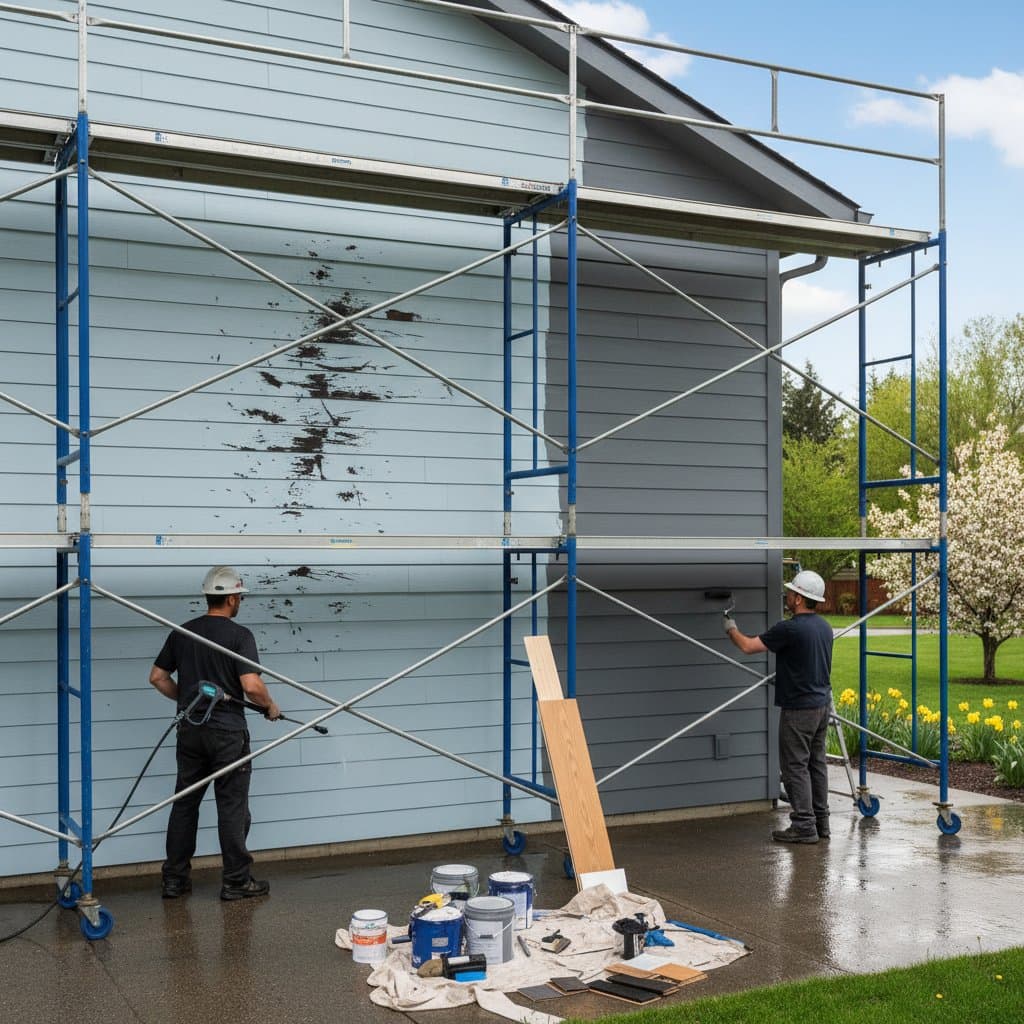
- Clean with mild detergent and a soft brush to eliminate dirt, mildew, and residue.
- Scrape loose material and sand edges for smoothness.
- Seal cracks using exterior caulk or filler.
- Apply material-specific primer to promote bonding and block porosity.
- Coat evenly with exterior-grade paint in two layers for optimal coverage.
Spraying accelerates application on broad areas. Mask adjacent elements and select quick-drying products to minimize disruption.
Execute Replacement Effectively
Strategic planning streamlines replacement projects. Insights from professional installations highlight essential practices.
- Source matching materials by referencing existing samples to avoid discrepancies in color or texture.
- Install enhanced underlayment, such as moisture barriers, to boost efficiency and defense.
- Verify substrate dryness and stability prior to new panel attachment.
- Secure joints with caulk and flashing for enduring seals.
- Apply finish coats post-installation to enhance UV protection and consistency.
Uniform painting of blended sections integrates old and new seamlessly.
Balance Design and Practicality
Siding influences curb appeal and functionality. Decisions should align with architectural harmony and fiscal prudence.
- Prioritize longevity to minimize future interventions.
- Select colors and textures complementary to the home's style.
- Calculate total ownership costs, comparing periodic maintenance against singular investments.
- Favor eco-friendly options, including recyclable materials directed to reuse facilities.
This integrated approach yields exteriors that enhance value and sustainability.
Select Durable Finishes
Spring conditions facilitate exterior work, with moderate temperatures aiding curing and installation.
Opt for:
- Acrylic paints featuring mildew inhibitors for robust performance.
- Siding with pre-applied or embedded colors to counter fading.
- Elastic sealants for trim that accommodate movement without failure.
Complement repairs by clearing gutters and directing soil runoff away from foundations. Effective drainage halves the risk of degradation.
Maintain the Exterior Long-Term
Routine upkeep preserves investments. Periodic evaluations prevent minor issues from escalating.
- Check joints for openings.
- Address paint chips promptly.
- Clean gently with soap and water, avoiding high pressure.
- Trim overhanging branches to reduce abrasion.
Consistent care ensures the exterior remains resilient and visually appealing. Informed choices in painting or replacement safeguard the home against future storms, blending protection with enduring style.