Avoid the $800 Trap: Lead Testing Before Sanding
Homeowners frequently view sanding old paint as a straightforward task in renovation projects. However, this assumption often conceals a significant risk. Sanding without prior lead testing can lead to expenses exceeding $800, along with health hazards and regulatory issues. Lead testing integrates essential safety and compliance into preparation, thereby averting financial burdens and protecting occupants.
Importance of Lead Testing Prior to Sanding
Sanding painted surfaces without lead verification releases hazardous dust that permeates the home. A single layer of lead-based paint contaminates furnishings, floors, and ventilation systems. Exposure poses grave risks, particularly to children and pregnant individuals. Remediation after contamination escalates costs from a minor test fee to substantial professional services.
Testing serves as both a precautionary measure and a regulatory necessity. Local laws in many areas mandate certified evaluation before altering painted surfaces in pre-1978 homes. Professionals who overlook this face penalties, lawsuits, and reputational harm. Homeowners undertaking DIY efforts without testing risk forfeiting insurance support for cleanup. An inexpensive kit or expert assessment forestalls these complications.
Project Cost Analysis
Typical Expenses
- Basic surface testing: $50 to $150
- Certified professional evaluation: $200 to $400
- Remediation upon detection: $800 to $2,500 per room
Included Services
- Sampling or on-site detection
- Lab verification or immediate results
- Compliance certification
- Advice on secure sanding techniques
Additional Charges
- Comprehensive home assessment for widespread areas
- Decontamination of affected zones
- Post-work air testing
- Containment equipment and barriers
Influencing Variables
| Factor | Cost Influence | Illustrations |
|---|---|---|
| Area size | Larger spaces elevate fees | Full walls or ceilings |
| Paint state | Deteriorated layers demand extra effort | Chipping or peeling surfaces |
| Access challenges | Difficult spots raise labor costs | Elevated trim or stairs |
| Detection method | Lab tests ensure precision at higher price | Swabs versus chip analysis |
| Regional rules | Permits add expenses | Mandatory certified personnel |
Mechanism of the $800 Trap
Budgets typically cover supplies and labor, yet omit testing provisions. The issue arises during sanding when older paint layers prompt an abrupt halt. Verification then becomes required, imposing containment and delays. Positive results necessitate regulated procedures, with setup and testing alone surpassing $800.
These figures exclude repainting or lifestyle interruptions from barriers and air controls. A routine update transforms into a supervised operation demanding experts. Initial testing eliminates this escalation.
Lead Testing Procedure
Initial Inspection
Examine surfaces for signs of age. Homes built before 1978 likely feature layered paints. Indicators include cracks, powdery residue, or heavy accumulation suggesting underlying lead.
Conducting Tests
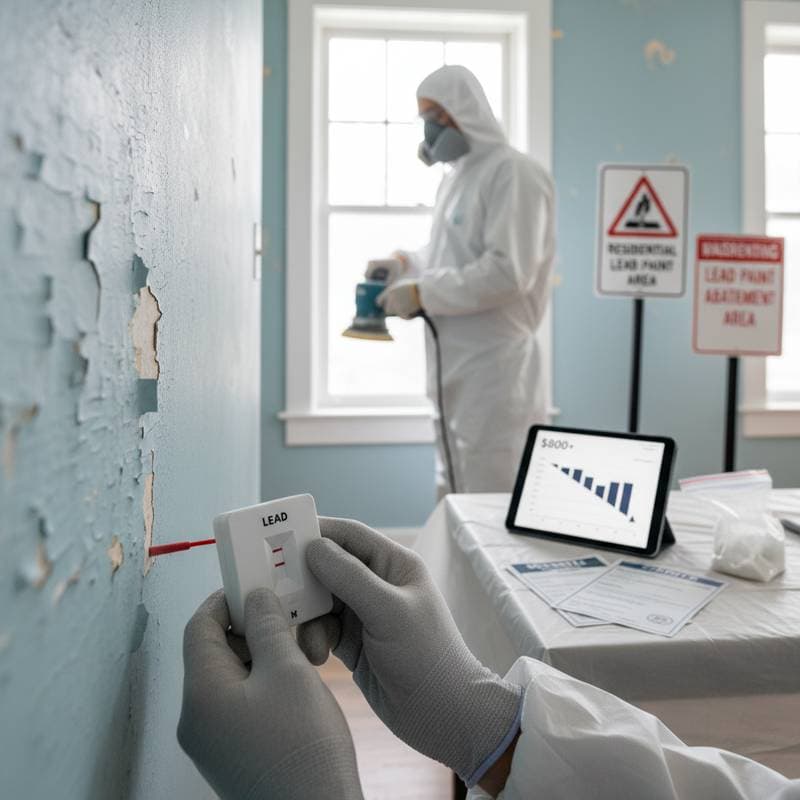
Options range from home kits to specialist services. Kits offer economy but risk inaccuracies with complex layers. Experts employ XRF devices or lab methods for reliable outcomes and official reports.
Result Interpretation
Negative findings allow standard sanding. Positive detection requires sealed workspaces, HEPA vacuums, and geared personnel. Records shield against legal exposure and affirm adherence to standards.
Safe Execution and Verification
Confirmed lead demands enclosed sanding with filtration. Post-task air checks confirm habitability. Professionals manage disposal to minimize spread.
Comparing Professional and DIY Options
DIY suits initial scans but falters on depth and validity. Experts penetrate layers for exact measurements.
DIY Testing
- Expense: $10 to $40 per kit
- Advantages: Low cost and convenience
- Drawbacks: Questionable reliability; lacks formal proof
Expert Testing
- Expense: $200 to $400
- Advantages: Precise, documented, regulation-compliant
- Drawbacks: Greater initial investment
Certified results prove invaluable for sales, rentals, or major updates, mitigating future disputes.
Contractor Responsibilities
Professionals must uphold lead protocols in vintage properties. They deploy enclosures, filtered tools, and secure waste handling. Verify training and licensing before engagement.
Handymen manage minor tasks on contemporary paints but require certification for potential lead work. For pre-regulation surfaces, secure testing via qualified partners.
Hiring Warnings
- Dismissal of testing requirements
- Absence of safety protocols in proposals
- Suspiciously reduced bids excluding verification
- Lack of credential evidence
Price-driven selections invite the trap. Established firms incorporate safeguards, recognizing broader consequences.
Project Timelines
Absence of lead permits one to two days for prep and execution. Presence extends to three to five days, encompassing containment and validation.
Mid-process discovery prolongs interruptions. Early testing streamlines schedules.
Homeowner Preparation Steps
Pre-Project Actions
- Pinpoint potential lead zones
- Arrange evaluation prior to agreements
- Inform household of procedures
- Safeguard or relocate items near work areas
Ongoing Oversight
- Confirm gear usage by team
- Seal off zones
- Restrict access until approved
Completion Checks
- Obtain clearance documents
- Verify thorough debris removal
- Retain files for records
Strategies to Minimize Expenses
- Bundle testing with broader inspections.
- Demand itemized proposals.
- Opt for targeted tests on small sections.
- Engage compliant experts to avert mishaps.
- Schedule during off-peak periods for discounts.
Limits of DIY Sanding
Self-sanding minor spots tempts cost-cutting, yet invites widespread pollution absent verification. Proceed only post-negative test, with masks, coverings, and airflow management.
Securing Project Success
Prior lead testing fortifies against monetary, regulatory, and wellness threats. This investment circumvents the $800 pitfall, ensuring smooth renovations.
Common Questions
What is the cost of lead testing for standard projects?
Surface checks range from $50 to $150; full certifications cost $200 to $400. Detection triggers room-specific fees over $800.
How long until sanding after testing?
Field tests yield instant feedback; labs require days. Advance scheduling avoids halts.
Is untested sanding safe?
No; it disperses toxins. Verification safeguards all parties.
Handyman or licensed professional for prep?
Choose certified contractors for aged surfaces; handymen suit non-lead tasks.
Consequences of mid-sanding discovery?
Immediate cessation, isolation, and expert intervention; expenses surpass $800.
Preventing surprise fees?
Initiate with tests, secure detailed bids, and select qualified teams. Clear contracts outline protections.