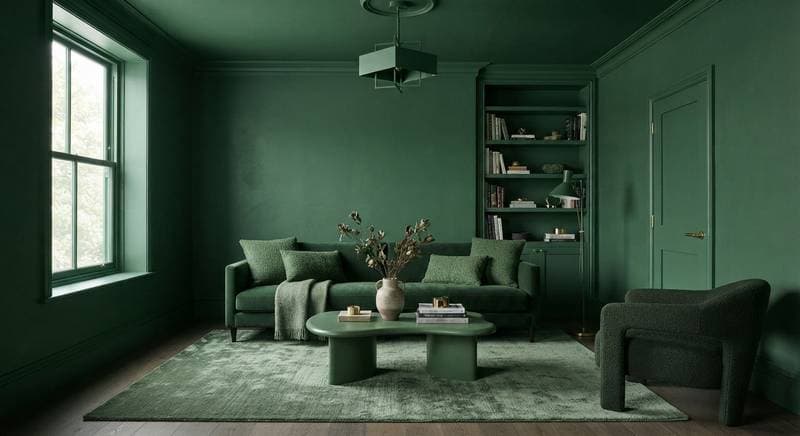
Color Drenching: How Bold Ceilings Transform Rooms
Color drenching applies one paint color or closely related shades across multiple surfaces in a room. Walls, trim, doors, and ceilings share the same hue. The ceiling often becomes the most surprising element. Instead of leaving it white, painting it to match or complement the walls creates an intentional, cohesive space.
This approach works in both compact and larger rooms. Success depends on selecting the right color, finish, and scope. A bold ceiling draws the eye upward and softens the boundary between walls and overhead surfaces. It can also make a low room feel more enclosed if the color is too dark or lighting is limited. Careful planning helps homeowners decide whether to paint the entire room, focus on the ceiling, or hire a professional for a cleaner result.
What Color Drenching Includes
A fully drenched room typically carries the same color across walls, ceiling, baseboards, window trim, and doors. Surfaces do not need identical sheen. Walls may have an eggshell finish while trim uses satin for added durability. The shared color creates continuity even when finishes differ.
A ceiling can stand apart while supporting a monochromatic palette. A deeper version of the wall color creates contrast without introducing a competing hue. A lighter tint preserves a soft, airy feeling while making the overhead surface more noticeable.
Consider how the room functions and what it contains before choosing a scheme. Bedrooms, dining rooms, and reading spaces often suit rich, enveloping colors. Kitchens and busy family rooms benefit from midtone shades that show less dust and wear than very dark paint.
Color Drenching Cost Breakdown
Professional interior painting for a typical bedroom or living room costs roughly $2 to $6 per square foot of painted surface, including standard labor and materials. A smaller room may cost $600 to $1,800 when walls, ceiling, and trim are included. Larger rooms, extensive preparation, and premium paint can bring the total above that range. Prices depend on location, access, surface condition, and contractor scope.
What Is Usually Included
A written estimate should explain whether it covers:
- Moving or protecting furniture and covering floors
- Cleaning, sanding, and minor surface repairs
- Priming stains or patched areas when needed
- Painting walls, ceiling, doors, or trim as specified
- Removing masking materials and basic cleanup
What May Cost Extra
Ceilings with heavy texture, water stains, peeling paint, or cracks need more preparation. Repairs may add $100 to $800 or more, depending on damage extent. High ceilings and stairwells may require specialized ladders or scaffolding, increasing labor costs. Replacing damaged drywall, removing wallpaper, or painting built-ins usually requires a separate price.
| Cost factor | Typical effect | Example |
|---|---|---|
| Room height and access | Higher labor | A tall ceiling needs extra setup |
| Surface repairs | Added preparation cost | Cracks require patching and sanding |
| Number of surfaces | Higher total price | Ceiling, trim, and doors join the walls |
| Paint quality | Higher material cost | Washable finishes suit busy rooms |
Paint prices and labor rates vary by region. Ask whether the quote includes primer, the number of coats, and the exact surfaces to be painted. A low estimate may exclude preparation or trim, so compare written scopes rather than totals alone.
Choosing Colors and Finishes
Test colors on more than one wall, and include a ceiling sample if the overhead color is part of the plan. Light changes throughout the day, while lamps and nearby furnishings can shift how a shade appears. Look at samples beside flooring, upholstery, and cabinetry before buying enough paint for the room.
Deep green, navy, clay, and warm brown create a grounded, intimate mood. Soft blue, muted rose, and pale green feel calmer while still giving the ceiling a distinct role. If an all-over saturated color feels risky, paint the ceiling and trim in a related shade, then keep the walls lighter.
Use a finish suited to each surface. Flat or matte paint reduces visible ceiling imperfections. Eggshell is a common wall choice, while satin is easier to clean on trim and doors. Higher sheen reflects more light and can highlight uneven surfaces, so test it before committing.
DIY or Hire a Painter?
Painting a standard ceiling and room can be a manageable DIY project for someone comfortable with ladders, cutting in, and careful protection. Budget for rollers, extension poles, brushes, drop cloths, tape, primer, and paint. Equipment and supplies can add $100 to $400, apart from the homeowner's time. A typical room may take a DIY painter several days, including preparation and drying between coats.
Hire a professional when ceilings are high, surfaces are damaged, the room has complex trim, or a precise, uniform finish matters. Painters also bring experience with cutting clean lines and estimating coverage. Electrical work, major drywall repairs, and moisture problems should go to appropriately qualified specialists rather than being covered with paint.
Hiring and Managing a Painting Contractor
Request at least two or three detailed estimates for a substantial project. Check references, insurance, and any licensing required locally. Ask who will do the work, how the room will be protected, and what happens if the paint needs another coat. Verify that the contract lists colors, brands or product levels, finishes, surfaces, preparation, cleanup, and payment terms.
Avoid paying the full amount upfront. A deposit may be reasonable for scheduling or materials, while payment milestones should correspond to completed work. Keep changes in writing, especially if repairs or additional surfaces are discovered after work starts.
Before painting, remove small items, clear access to walls, and agree on how large furniture will be handled. During the job, check progress in ordinary lighting and raise concerns promptly. At completion, inspect corners, edges, trim, and ceiling coverage. Ask the contractor to correct missed areas before final payment, and keep leftover labeled paint for future touchups.
Planning Your Project
Color drenching can make an ordinary room feel cohesive and expressive, but it does not require every surface to be saturated. Start with the ceiling's role, test samples, and decide how much preparation the room needs. A clearly written scope and realistic budget make it easier to judge whether a bold color scheme is right for your home.
Frequently Asked Questions
1. Does painting the ceiling the same color make a room feel smaller?
It can create a more enclosed feeling, especially with a dark color in a low room. A lighter shade, good lighting, or a ceiling color close to the walls can keep the look balanced.
2. How long does a color drenching project take?
A standard room often takes a professional crew one to three days, depending on preparation, coats, drying conditions, and the number of surfaces. Repairs or difficult access can extend the schedule.
3. Is ceiling painting suitable for DIY?
It can be, if the ceiling is reachable, in good condition, and the homeowner has suitable equipment. High ceilings, stains, peeling paint, and extensive repairs are reasons to hire help.
4. How should I compare painting estimates?
Compare preparation, paint products, coat counts, included surfaces, cleanup, and warranty terms. Request written estimates with the same scope so you can assess the differences accurately.
5. Should trim be the same sheen as the walls?
Not necessarily. Many homeowners use a washable eggshell or satin finish on trim and doors, with a flatter finish on the ceiling. The color can remain consistent while sheen varies by surface.
6. What if the ceiling has a water stain?
First identify and repair the source of moisture. Once the surface is dry and sound, a painter can prepare it and use an appropriate stain blocking primer before applying the finish paint.