This $40 Tool Slashes Drywall Sanding Time in Half
Sanding drywall ranks among the most challenging aspects of renovation and painting projects. The task generates excessive dust, demands physical effort, and consumes considerable time. A smooth surface remains crucial for a professional finish, however. Homeowners and contractors frequently turn to an affordable $40 tool that halves sanding duration while enhancing outcomes. Grasping the tool's mechanics, its advantages over conventional methods, and proper application techniques proves essential for boosting efficiency and achieving superior results.
Why Drywall Sanding Takes So Long
Conventional drywall sanding relies on a manual pole sander equipped with a sanding screen or paper secured to a flat head. Workers traverse expansive wall or ceiling areas, exerting consistent pressure and periodically assessing smoothness. Drywall dust accumulates rapidly, however, which clogs the sanding material and diminishes its cutting power. This necessitates frequent pauses to clear or swap out sheets, thereby extending the overall process.
Manual sanding also produces substantial mess. Fine particles coat nearby surfaces and linger in the air, complicating cleanup and posing risks to indoor air quality. Protective equipment and drop cloths offer some mitigation, yet dust often migrates beyond the immediate workspace.
The Game-Changing $40 Tool
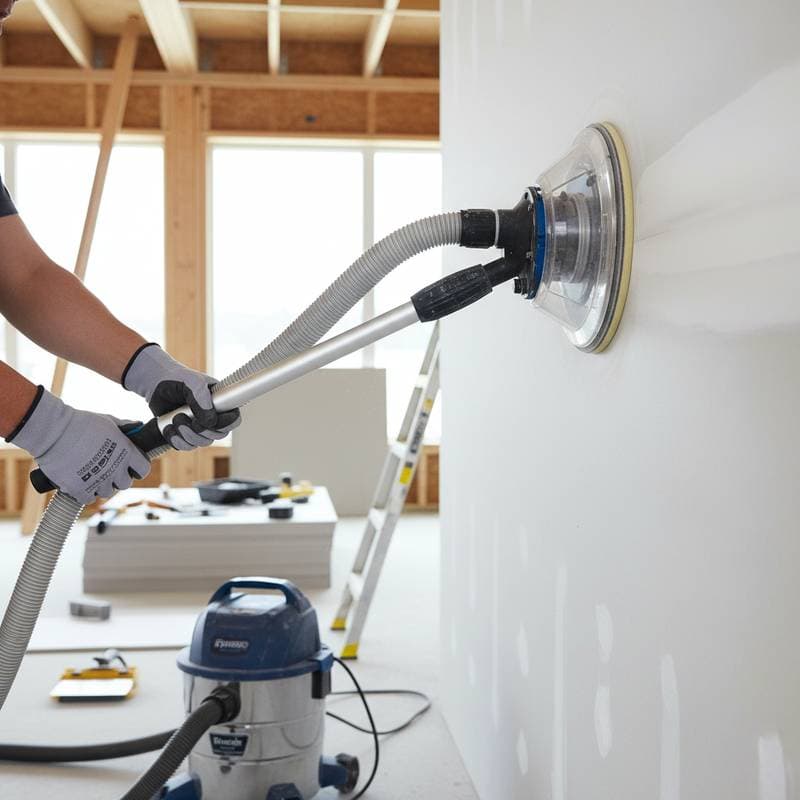
A vacuum-assisted drywall sander, commonly known as a dustless pole sander, revolutionizes this labor-intensive step. Available for approximately $40, the device links to a standard shop vacuum, which extracts dust during operation. Perforations in the sanding pad enable suction to draw particles away from the surface, preserving the clarity of both the drywall and the abrasive material over extended sessions.
This design minimizes clogging, ensuring steady sanding performance. Users cover broader sections without interruptions for maintenance. The integrated vacuum further maintains a tidier environment, slashing post-sanding cleanup demands.
Project Cost Breakdown
Average Cost Ranges
- Basic setup: $35 to $45 for a manual vacuum-assisted pole sander
- Mid-range setup: $80 to $120 for an electric drywall sander with dust extraction
- Professional setup: $200 to $400 for high-performance variable-speed sanders
What's Included
- Adjustable pole and sanding head
- Dust-collection hose
- Compatible sanding screens or discs
- Connection fittings for shop vacuums
What Costs Extra
- Replacement sanding screens: $10 to $15 per pack
- Extension hoses for large rooms: $20 to $30
- HEPA filter or dust bag upgrades for vacuums: $25 to $50
Factors That Affect Final Cost
| Factor | Cost Impact | Examples |
|---|---|---|
| Tool type | Higher cost for motorized versions | Electric sanders with speed control |
| Surface condition | Increases sanding time and screen use | Rough or uneven drywall patches |
| Area size | Raises total material cost | Larger rooms or multiple surfaces |
| Dust control needs | Adds cost for filters or accessories | Sensitive indoor environments |
Why It Saves So Much Time
Time efficiencies arise primarily from decreased clogging and improved workspace conditions. A clear sanding surface sustains optimal abrasiveness, allowing quicker coverage per stroke and fewer revisits to dulled areas. Vacuum suction promotes uniform pad contact with the surface, fostering even results and minimizing redundant passes.
Enhanced visibility represents another key benefit. Absent dust clouds, workers discern completed sections and lingering imperfections with ease. This precision curtails oversanding risks and overlooked spots, streamlining the workflow.
Timeline Expectations
Manual sanding often occupies an entire day for a standard room. The vacuum-assisted approach typically completes equivalent tasks in half that duration. Minor repairs may require just one to two hours, whereas extensive or multi-room endeavors still realize accelerated progress. Cleanup efforts diminish substantially, as reduced dust accumulation eases the removal from floors, trim, and furnishings.
Professional vs. DIY Use
This tool serves both seasoned contractors and novice homeowners effectively. For individuals addressing modest repairs or remodels, the modest $40 outlay recoups value through expedited timelines and lessened aggravation. Contractors incorporate vacuum-assisted models into routine operations to uphold site cleanliness and optimize labor allocation.
When DIY Makes Sense
- Small wall repairs or patching
- Ceiling touch-ups following minor water damage
- Preparation of a single room for painting
When to Hire a Professional
- Full-house remodels or new construction
- Projects featuring high ceilings or intricate surfaces
- Assignments demanding seamless integration of aged and fresh drywall
Experienced professionals excel in thorough surface prep and detect subtle flaws that amateurs might overlook. They deploy specialized gear for vast areas, such as motorized sanders with adaptable heads and onboard dust management.
How to Select the Right Sander
Evaluate vacuum-assisted pole sanders based on several critical attributes:
- Compatibility with your vacuum: Verify secure hose fittings to prevent air leaks.
- Head flexibility: Opt for rotating or pivoting designs that navigate ceilings and corners fluidly.
- Weight: Choose lightweight poles to combat fatigue over prolonged sessions.
- Sanding pad size: Larger pads expedite coverage on open expanses but demand control in confined areas.
- Durability: Prioritize constructions with metal or reinforced plastic elements capable of enduring applied force.
For regular applications, upgrade to an electric drywall sander. These units incorporate motors that rotate the disc, further abbreviating task duration. Though initial expenses exceed basic models, their prowess suits demanding undertakings.
Preparing for the Sanding Process
Commence by examining drywall seams and patches for completeness. Apply joint compound as required and permit full drying. Ensure all fasteners sit flush with the surface. Shield floors and vents using plastic sheeting to intercept residual dust. Secure the sander to the vacuum, confirm robust suction, and initiate with medium-grit screens to preclude surface damage.
Guide the sander across walls in overlapping motions with gentle force; vacuum adhesion supplies adequate adherence. Post-initial pass, illuminate the wall with strong light to identify discrepancies. Conclude with fine-grit screens to yield a primer-ready finish.
Quality and Safety Tips
- Employ a vacuum featuring a HEPA filter to curb airborne particles.
- Don a respirator and safety glasses for comprehensive safeguarding.
- Route cords and hoses clear of walkways to avert stumbles.
- Evacuate the vacuum canister regularly to preserve suction potency.
- Refrain from excessive sanding at corners or edges, where drywall facing proves delicate.
Planning Your Project
Account for preparation, sanding, inspection, and cleanup when projecting timelines and budgets for drywall work. Though dustless tools limit dispersion, trace amounts persist, warranting subsequent vacuuming and surface wiping. Segment large or multi-room tasks to sustain concentration and uniformity.
Solicit itemized estimates from professionals, detailing labor, supplies, and equipment. Inquire about dustless sanding protocols, which influence both expense and site hygiene. Enhanced productivity frequently balances any premium rates tied to sophisticated tools usage.
Frequently Asked Questions
How much does it cost to sand drywall using a vacuum-assisted tool?
For a standard single-room endeavor, anticipate expenditures of $50 to $100, encompassing screens and vacuum add-ons. Expansive projects could escalate to $150 or beyond with extra supplies or filtration. The core tool at $40 represents a prudent recurring investment.
What grit should I use for different stages of sanding?
Begin with 120- to 150-grit screens for initial joint compound smoothing. Progress to 180- to 220-grit for overall surface leveling. Finalize with 320-grit for a paint-ready texture, ensuring progressive refinement without surface harm.
Does this tool work on ceilings as well as walls?
Yes, the adjustable pole and flexible head facilitate overhead access. Maintain light pressure to leverage vacuum suction for control, reducing arm strain during ceiling applications.
How do I maintain the sander for longevity?
Clean the sanding head after each use by tapping off residue and rinsing screens. Store the pole disassembled in a dry area to prevent corrosion. Inspect hose connections periodically for wear.
Can I use this with any shop vacuum?
Most standard models suffice, provided the hose diameter matches the fittings, typically 1.25 to 2.5 inches. Test for adequate airflow; weaker vacuums may compromise dust capture.
How can I avoid common sanding problems like swirl marks or uneven surfaces?
Apply fine-grit screens for concluding passes and sustain uniform pressure. Keep the sander in motion to evade gouging. Should swirls emerge, revert to a milder grit and abrade delicately until even.