The Essential $800 Moisture Test: Avoid $15,000 Paint Failures
Homeowners expect a professional paint job to deliver a smooth, enduring finish that boosts curb appeal and property value. However, bubbling, peeling, or cracking often appears soon after application. The primary cause is not substandard paint or sloppy application but moisture hidden beneath the surface. A professional moisture test, priced at approximately $800, serves as the strongest safeguard against repairs that can exceed $15,000.
This test uncovers issues overlooked by simple visual checks. It determines if walls, ceilings, or exteriors are suitable for painting or if water infiltration threatens the project. For those undertaking repaints or restorations, this investment averts significant losses in labor and materials.
Why Moisture Testing Matters
Sources of moisture include roof leaks, plumbing issues, or condensation under siding. Paint applied over damp areas seals in water, leading to blistering, flaking, or staining that affects large sections. In severe instances, trapped moisture fosters mold or weakens structural elements.
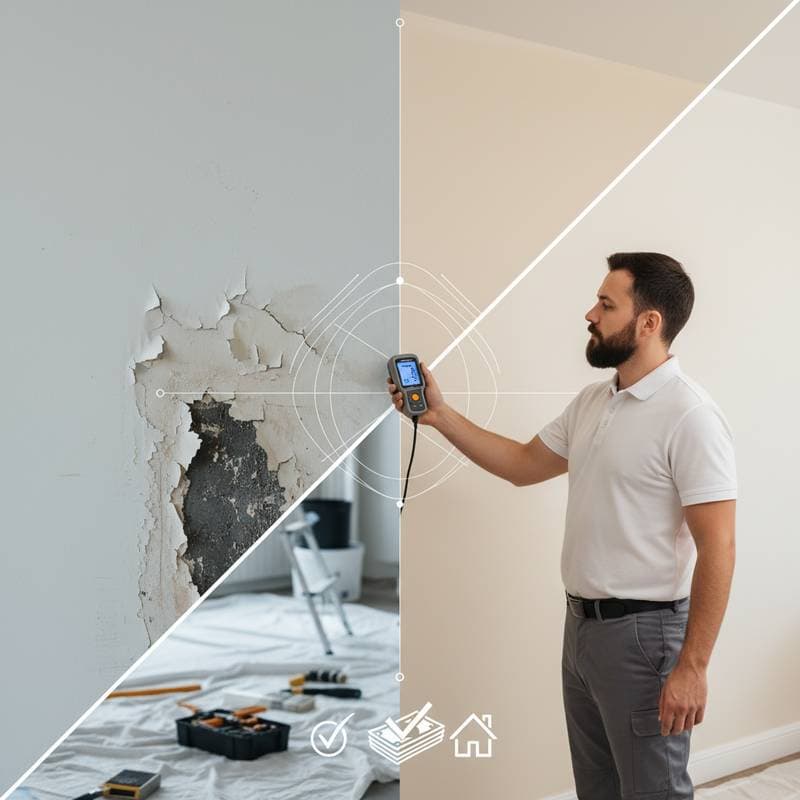
Painters frequently assess dryness through touch or sight alone. Moisture, however, persists within materials like plaster, drywall, or wood even when surfaces seem prepared. Professional testing employs precise meters and sensors to yield measurable data, informing decisions on drying, sealing, and priming.
Project Cost Breakdown
Average Cost Ranges
- Basic moisture test: $400 - $600
- Comprehensive test with detailed report: $700 - $900
- Premium diagnostic with thermal imaging: $1,000 - $1,200
What's Included
- Moisture readings from various surface locations
- Deployment of calibrated professional sensors and meters
- Mapping of moisture distribution
- Written guidance on corrections and surface preparation
- Post-drying or repair verification
What Costs Extra
- Infrared scans to locate concealed leaks or insulation voids
- Core sampling for dense materials like masonry or stucco
- Subsequent testing following remediation
- Urgent leak fixes or drying interventions
Factors That Affect Final Cost
| Factor | Cost Impact | Examples |
|---|---|---|
| Home size and surface area | +$100 to +$300 | Larger properties or multi-story buildings |
| Material type | +$50 to +$200 | Stucco or concrete demands deeper penetration |
| Accessibility | +$100 | Confined crawl spaces or elevated exterior walls |
| Extent of suspected damage | +$150 | Expanded sampling or multiple affected zones |
The initial expense remains modest compared to the repercussions of undetected issues. Early detection enables focused repairs that minimize overall project costs.
How Moisture Leads to Paint Failure
Water vapor permeates walls and ceilings continuously. When confined under paint, it saturates underlying materials. Exterior rain and humidity penetrate from outside, while interior leaks or condensation exert pressure from within. Thermal fluctuations cause this moisture to expand, lifting or fracturing the paint layer.
Recognizable indicators of moisture-induced problems encompass:
- Blisters or bubbles forming on painted areas
- Soft, spongy wood under paint coatings
- White, powdery efflorescence deposits
- Mold or mildew along paint edges
- Premature fading or uneven coloration
These symptoms indicate entrapment. Pre-painting testing eliminates the risk of early deterioration and expensive fixes.
Professional vs. DIY Testing
Affordable moisture meters are available for home use, yet DIY efforts yield unreliable outcomes. These devices capture only superficial levels, ignoring deeper saturation critical to paint success. Certified professionals utilize advanced, calibrated equipment to assess internal moisture comprehensively.
Professional Testing Advantages
- Accuracy: Measurements occur at varied depths and locations.
- Documentation: Reports bolster warranty and insurance processes.
- Expert interpretation: Testers pinpoint origins beyond surface signs.
- Remediation planning: Advice targets underlying issues prior to painting.
While DIY appears economical, overlooking key spots invites extensive failures. Engaging qualified experts guarantees dependable insights and confidence.
When to Schedule a Moisture Test
Schedule testing ahead of significant painting or renovation efforts. Consider it essential under these circumstances:
- Prior paint exhibits ongoing bubbling or peeling
- The property has endured leaks or floods
- Surfaces register as cold, damp, or odorous
- Stains from moisture mark ceilings or walls
- Recent mold treatment or removal has occurred
Early evaluation provides ample opportunity for drying, mending, or sealing. Such preparation secures optimal adhesion and longevity for the fresh coat.
Typical Project Timeline
- Initial inspection: The specialist examines targeted zones and selects measurement sites.
- Moisture mapping: Data collection spans all relevant surfaces, prioritizing vulnerable areas.
- Data analysis: Findings align with industry standards for paint readiness.
- Reporting: A comprehensive document outlines sources and corrective measures.
- Correction phase: Drying or repairs address any excesses.
- Verification testing: Reassessment confirms suitability for painting.
Most projects conclude within one to two days. Extensive buildings or intricate substrates may extend timelines, particularly with required drying aids.
Cost of Ignoring Moisture Problems
Foregoing testing transforms standard painting into a major setback. Frequent consequences involve:
- Complete repaints from extensive peeling
- Substitution of compromised drywall or siding
- Structural interventions for rot or mold
- Specialized handling of internal water damage
Failure escalates expenses rapidly. An average exterior repaint ranges from $10,000 to $15,000 based on scale and substrates. Moisture sabotage nullifies this outlay, rendering the $800 test a prudent fraction of potential losses.
Working With Contractors and Painters
Initiate conversations about moisture testing during initial project discussions. Established painters value test outcomes, as they validate surface conditions for application. Certain firms integrate testing into prep work; others suggest third-party experts.
Pose these inquiries to potential hires:
- Do you perform moisture tests prior to painting?
- Which tools or devices do you employ?
- How do you address overly moist surfaces?
- Can you furnish documented moisture data?
Responses delivered with assurance reflect dedication to superior, enduring outcomes.
Preventing Future Moisture Problems
Post-painting vigilance sustains moisture balance. Maintain ventilation, address leaks promptly, and caulk openings near windows and doors. Inspect and clear gutters and downspouts regularly to divert water from walls. Employ exhaust fans and dehumidifiers indoors to regulate humidity.
Consistent upkeep stabilizes conditions and prolongs paint durability. Upon detecting dampness indicators, prompt retesting prevents escalation.
Securing Lasting Paint Results
Opting for moisture testing prioritizes foresight over fixes. Though a small portion of the painting budget, it shields that expenditure and guarantees resilience. This step elevates painting from mere aesthetics to a robust enhancement against time, elements, and use.
Frequently Asked Questions
1. How much does professional moisture testing typically cost?
Most homeowners allocate $700 to $900 for thorough testing, encompassing data gathering and reporting. Variations arise from property dimensions, substrates, and inclusions like thermal imaging or rechecks.
2. What equipment do professionals use for moisture testing?
Experts deploy pin-type and pinless meters, along with thermal cameras for non-invasive scans. These tools measure both surface and internal levels accurately.
3. How long does it take for surfaces to dry after a positive test?
Drying periods vary from days to weeks, depending on severity and methods like fans or dehumidifiers. Professionals monitor progress to confirm readiness.
4. Is moisture testing necessary for interior painting only?
No, it applies to both interiors and exteriors. Hidden dampness affects adhesion universally, regardless of location.
5. Can insurance cover moisture testing costs?
Coverage depends on policy details, often applying if linked to leaks or damage claims. Consult your provider for specifics.
6. How can homeowners prevent moisture from returning after painting?
Regular maintenance proves essential. Clear gutters, seal crevices, control indoor humidity, and fix leaks swiftly. Ventilation and routine checks preserve dry environments that safeguard paint integrity.