Sanding vs Deglosser: Fastest 2025 Paint Prep Revealed
Prepare for a fresh coat of paint without the frustration of tedious prep work. Surface preparation determines the success of any paint job, yet many overlook its importance. The key decision involves choosing between sanding and deglosser, based on the surface condition, project timeline, and desired outcome. This guide examines each method, identifies ideal applications, and outlines strategies for professional results that save time and resources.
Why Prep Matters So Much
Effective surface preparation ensures paint adheres properly and lasts longer. Glossy, soiled, or irregular surfaces prevent paint from bonding, leading to peeling or fading over time. Proper prep establishes a strong foundation that maintains color vibrancy and durability.
In high-pressure environments like television production sets, where walls, cabinets, and props require quick repainting, efficient prep proves essential. Whether refreshing kitchen cabinets or updating trim, selecting the right technique between sanding and deglossing streamlines the process and yields a polished appearance.
What Sanding Really Does
Sanding serves as the traditional approach to paint preparation by mechanically removing gloss and smoothing the surface. This method creates texture for better paint adhesion while addressing imperfections.
How it works:
- Sandpaper or a sanding sponge generates fine scratches on the existing finish.
- These scratches provide mechanical grip for primer or paint.
- Visible fine dust indicates readiness for the next layer.
Best for:
- Rough or unfinished wood.
- Peeling or chipping paint.
- Surfaces with dents, drips, or irregularities.
- Projects requiring an ultra-smooth finish.
Grit guide:
- Use coarse grit (80 to 120) for initial stripping or repairs.
- Switch to medium grit (150 to 180) for blending areas.
- Finish with fine grit (220 to 320) for a smooth texture.
Sanding delivers a tactile smoothness ideal for detailed work, though it generates dust, requires effort, and extends project time. Deglossers offer an alternative for cleaner, quicker results.
What Deglosser Does and Why It’s Popular
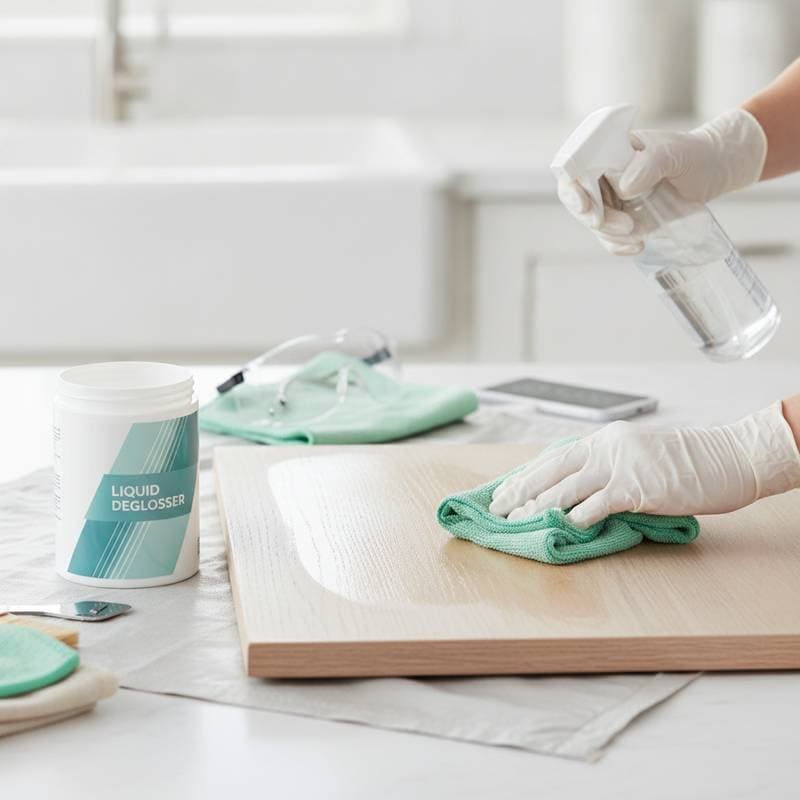
Deglosser, often referred to as liquid sandpaper, chemically dulls glossy surfaces to promote paint adhesion. This solution provides a rapid, tool-free option suitable for indoor projects or time-sensitive tasks.
How it works:
- Apply with a lint-free cloth to soften the finish.
- It etches the surface lightly to create a matte texture.
- The area dries in minutes, ready for priming or painting.
Best for:
- Glossy trim and moldings.
- Cabinets and doors.
- Furniture with detailed edges.
Deglossers excel in confined spaces or on intricate details where sanding risks damage. In production settings, teams rely on them to minimize dust and accelerate workflows.
Comparing Speed and Results
Time efficiency varies significantly between methods. Sanding an entire room's trim or set of cabinets may require several hours, particularly with multiple grit changes. Deglosser allows painting to begin in as little as 30 minutes after application.
Speed comparison:
- Sanding: Moderate pace, influenced by surface size and tool type.
- Deglosser: Rapid application and drying.
Finish quality:
- Sanding: Excels at leveling and correcting flaws.
- Deglosser: Ideal for undamaged, glossy surfaces.
Mess factor:
- Sanding: Produces dust that demands thorough cleanup.
- Deglosser: Involves minimal residue, though ventilation remains necessary.
For intact surfaces needing only a sheen change, deglosser accelerates the process. Damaged or uneven areas benefit from sanding's precision.
Budget Options for Every Painter
Surface prep tools and materials fit various budgets without compromising quality.
Low budget (under $20):
- Manual sanding block with assorted grits.
- Basic deglosser from local suppliers.
- Reusable cloths for application and cleanup.
Mid budget (under $75):
- Electric orbital or mouse sander.
- Respirator mask with vacuum attachment.
- Premium deglosser formulated for multiple surfaces.
Higher budget ($100+):
- Variable-speed sander with built-in dust collection.
- Industrial-strength prep solutions.
- Microfiber cloths and protective gloves for repeated use.
Regardless of investment, consistent technique ensures strong results. Always wipe surfaces clean after prep to remove dust or residue that could impair adhesion.
Combining Both for Best Results
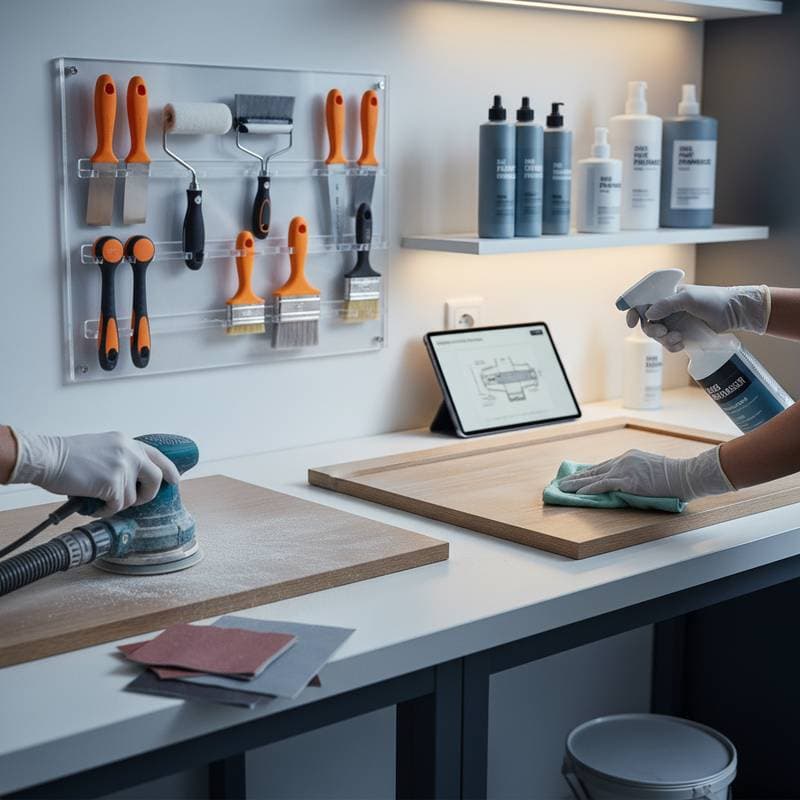
Integrate sanding and deglosser for optimal preparation on complex surfaces. Begin with light sanding to address roughness, then use deglosser to eliminate remaining gloss. This approach suits cabinets or furniture demanding both smoothness and grip.
Follow this sequence:
- Clean the surface using mild detergent and water; dry thoroughly.
- Sand lightly with fine grit to refine texture.
- Remove dust with a damp cloth.
- Apply deglosser evenly and allow it to dry completely.
- Proceed to priming and painting.
This method produces finishes comparable to professional applications.
Safe and Smart Prep
Handle deglossers with care due to their chemical nature. Wear protective gloves, ensure adequate ventilation, and store products away from heat sources. For sanding, especially on older paints, use a dust mask or respirator to avoid inhaling particles.
Safety measures protect health and enhance project outcomes. A secure workspace fosters focus and precision in every step.
What Works Best on Different Materials
Tailor prep methods to specific materials for reliable adhesion.
Wood: Opt for sanding on raw or damaged pieces; use deglosser on sealed, intact wood.
Laminate: Apply deglosser exclusively to avoid scratching the thin veneer.
Metal: Perform light sanding with fine grit, then apply a metal-specific primer.
Plastic: Choose deglosser or an adhesion-promoting primer over sanding.
Existing painted walls: Deglosser effectively dulls sheen for fresh layers.
Selecting the appropriate technique per material ensures efficiency and durability.
Entrepreneurial Perspective: Prep as Quality Control
In professional painting and design, preparation acts as the foundation of quality. Investing time upfront prevents rework and elevates client satisfaction. This discipline shapes a business's reputation through reliable, long-lasting results.
Train teams to prioritize prep for consistent performance. Such practices reduce callbacks, streamline operations, and strengthen client relationships.
Living with Your Design
A well-prepped surface endures daily use while preserving its appearance. Colors remain vivid, and cleaning proves straightforward without damage.
Maintain tools like sanding sponges or deglosser for future touch-ups. Light refreshes extend the life of painted elements, keeping spaces vibrant with minimal effort.
Achieve enduring beauty through deliberate preparation, regardless of project scale.