How an $800 Moisture Test Prevents Costly Paint Disasters
Moisture testing might seem routine, yet it determines whether a paint job endures or fails prematurely. Professionals call it the $800 test because neglecting it often results in repairs exceeding that amount. Homeowners frequently spend thousands on fresh paint, only to encounter blistering, peeling, or bubbling soon after. Hidden moisture beneath surfaces like siding, stucco, drywall, or masonry typically causes these problems. Conducting a professional moisture test before painting ranks among the wisest steps for safeguarding finances and property.
Why Moisture Testing Matters
Paint adheres to surfaces that appear clean, but adhesion relies on underlying conditions. Concealed moisture exerts pressure that lifts paint from substrates. Even minor trapped water can compromise an entire finish.
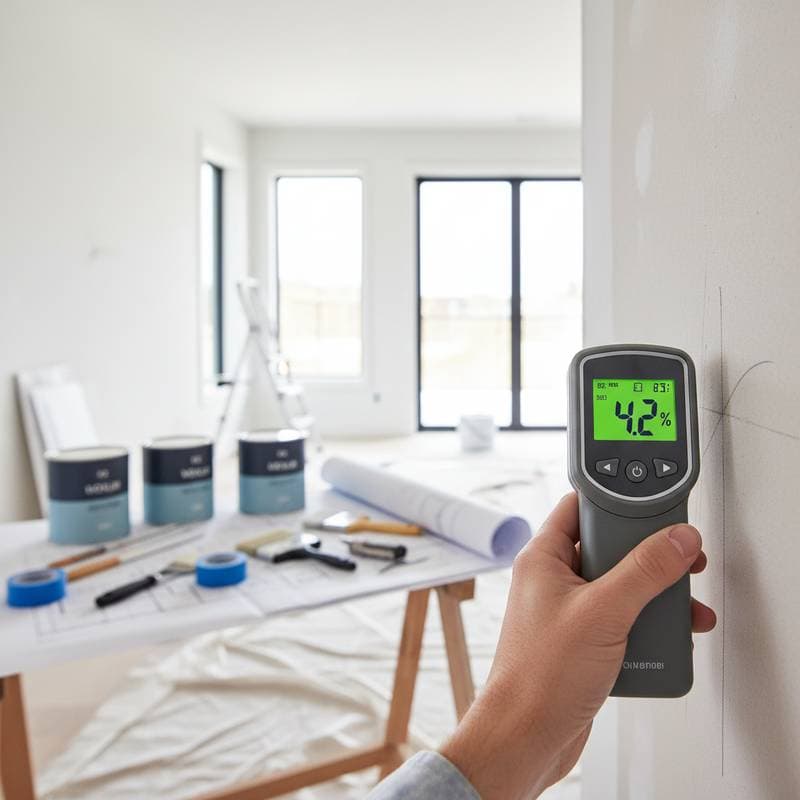
Experts use specialized meters to assess moisture through conductivity or resistance within materials. This process reveals damp zones and guides decisions on drying, sealing, or repairs prior to painting. Testing ensures surfaces support durable bonds.
Consequences of Overlooking Moisture
Foregoing a moisture test saves initial costs but invites substantial expenses later. Moisture breaches paint layers, leading to bubbles, flakes, and stains. Remediation involves sanding, scraping, priming, and repainting.
A single $800 test averts jobs that range from $3,000 to $5,000. Moisture also damages drywall, rots wood, and fosters mold, escalating repair bills. Proactive testing promotes adhesion and longevity, sparing owners repeated interventions.
Typical Costs for Moisture Testing
Professional services generally range from $500 to $900, varying by surface size and complexity. Larger homes demand more effort and tools.
Breakdown includes:
- Small areas, such as one or two walls: $300 to $500
- Mid-sized interiors or exteriors: $600 to $800
- Extensive or multi-surface evaluations: $900 to $1,200
Fees encompass testing and a report outlining levels, issues, and preparation advice.
Components of Testing Expenses
| Component | Low Range | High Range | Details |
|---|---|---|---|
| Meter inspection | $150 | $300 | Readings on primary surfaces |
| Infrared scanning | $200 | $400 | Locates concealed water |
| Preparation guidance | $100 | $250 | Specifies drying or sealing steps |
| Report and analysis | $50 | $100 | Delivers actionable insights |
These elements combine for an average $800 full-home assessment, hence the common label.
Influences on Testing Prices
Multiple elements shape costs, aiding informed budgeting.
Material Type
Dense substances like stucco or concrete necessitate thorough probing, raising fees. Porous options such as wood or drywall allow quicker assessments.
Accessibility and Extent
Reaching elevated or obstructed areas increases labor. Multi-level structures require additional gear.
Weather Factors
High humidity or recent rains may prompt rechecks for accuracy.
Documentation Depth
Comprehensive reports with images and suggestions add $100 to $200.
Testing Options by Scope
| Level | Basic | Standard | Premium | Distinctions |
|---|---|---|---|---|
| Single surface | $300–$500 | $500–$700 | $700–$900 | Premium adds imaging and analysis |
| Full home | $600–$900 | $900–$1,200 | $1,200–$1,500 | Includes verification and photos |
| Reassessment | $150–$250 | $250–$350 | $350–$500 | Confirms dryness post-remediation |
Safeguarding Your Paint Investment
Fresh paint enhances curb appeal, but durability hinges on substrate readiness. Testing uncovers issues early, enabling leak fixes, crack seals, or ventilation upgrades.
It also curbs mold and odors that diminish value. This modest expense yields assurance and maximizes paint lifespan.
Linking Testing to Long-Term Value
Financially, moisture testing offers high returns in maintenance. An $800 outlay prevents rework costs and supports warranty claims, as manufacturers often mandate dry-surface proof.
In property sales, intact paint boosts offers. Testing preserves finishes, upholding appearance and worth over time.
Practical Ways to Minimize Costs
Strategic approaches lower expenses while upholding quality.
- Time tests for dry seasons to expedite drying and avoid extras.
- Spot-check evident damp spots beforehand to streamline efforts.
- Package testing with painting services for discounts.
- Use dehumidifiers or fans pre-test to aid moisture reduction.
- Apply sealants post-test to block future entry points.
These tactics maintain budgets and secure results.
Allocating Funds Wisely
Reserve 10 to 15 percent of painting budgets for testing and prep. For a $6,000 project, allocate $600 to $900.
Seek contractors who integrate testing or endorse specialists. Their inclusion signals comprehensive work, reducing failure risks.
Common Questions on Moisture Testing
What does professional moisture testing cost before painting?
Homeowners typically pay $500 to $900 for comprehensive checks. Smaller zones cost less; expansive ones may hit $1,200. Pricing accounts for tools, duration, and reports to verify paint readiness.
Which elements most affect testing expenses?
Surface type, access ease, humidity, and report detail drive costs. Dense materials like stucco demand more effort than wood or drywall.
When should you schedule testing to control costs?
Opt for dry weather to yield precise, swift outcomes and enable prompt painting. Off-peak seasons might offer savings amid lower demand.