Why Wet-Sanding Reduces Drywall Dust by 95 Percent
Preparing drywall often generates significant mess. Fine particles fill the air, settle on surfaces, infiltrate vents, and require extensive cleaning. Wet-sanding addresses these challenges effectively. This method reduces dust by up to 95 percent. Homeowners and contractors use it for wall preparation in repaints or full renovations. The result includes cleaner air, organized tools, and efficient workflows.
Examine the process, required materials, and reasons for its popularity among experienced practitioners.
Step-by-Step Guide to Wet-Sanding
Follow these steps for reliable results. Basic supplies and careful application suffice.
-
Assemble materials. Select a drywall sanding sponge with an abrasive surface, a bucket of warm water, and clean rags. For extensive areas, employ a pole sander equipped with a damp sanding screen to increase efficiency.
-
Prepare the workspace. Although dust remains low, cover floors with drop cloths. Shield electrical outlets and position a bright light to illuminate the surface.
-
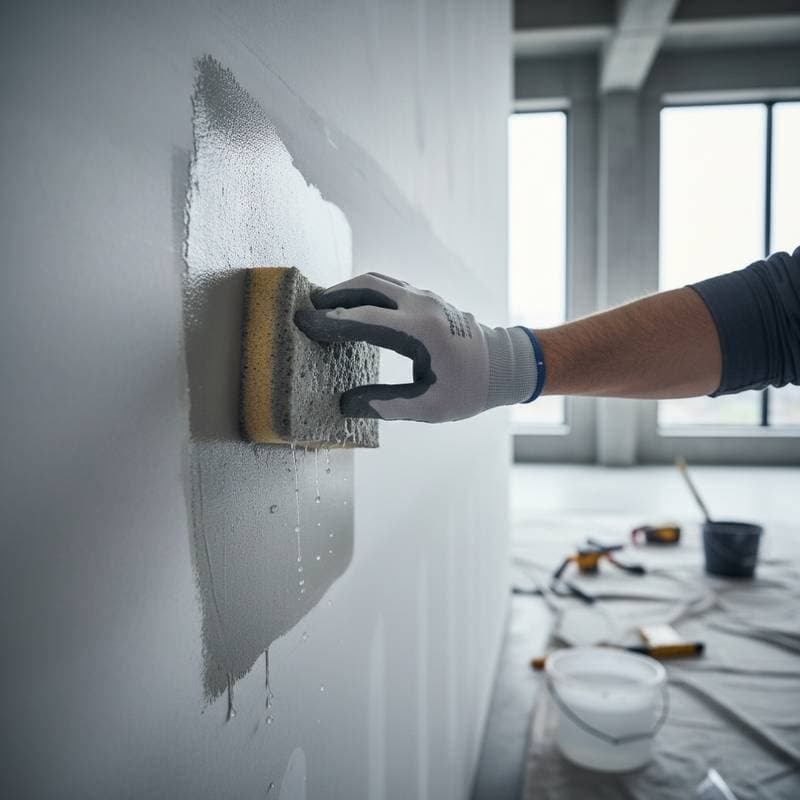
Moisten the sponge. Squeeze out excess water until the sponge feels damp but not saturated. Excess moisture may weaken the drywall excessively and prolong drying.
-
Apply circular strokes. Use light circular motions to blend compound edges. A slurry develops as the surface smoothens. Rinse the sponge frequently in the bucket to maintain cleanliness.
-
Blend edges gradually. Reduce pressure near seams to prevent damage and ensure uniformity.
-
Allow full drying. After achieving smoothness, wait for complete drying before priming or painting. Damp spots appear with a subtle sheen.
This approach eliminates dust clouds, prolonged vacuuming, and residue in paint layers.
Dry Sanding Versus Wet-Sanding: Key Differences
Consider the practical distinctions between methods.
| Feature | Dry Sanding | Wet-Sanding |
|---|---|---|
| Dust Control | Substantial airborne particles | 95 percent dust reduction |
| Cleanup Time | Extended, frequently hours | Brief, typically minutes |
| Surface Finish | Rapid but potentially irregular | Even and integrated |
| Equipment | Sandpaper and vacuum | Sponge and water |
| Best Applications | New installations on large scales | Renovations in occupied areas |
Wet-sanding suits painting professionals in residential or commercial settings where dust management proves essential.
Practical Techniques from Experienced Professionals
Professionals refine wet-sanding through tested strategies. These enhance performance in various conditions.
- Employ two buckets: one for rinsing soiled sponges and another for fresh water. This prevents smears on the surface.
- Tint joint compound batches lightly for multi-layer applications. The color reveals areas needing attention.
- Illuminate the wall with a flashlight at an angle. Shadows highlight imperfections for targeted correction.
- Keep microfiber cloths available. They absorb lingering moisture and prepare the surface for primer.
- Sand from top to bottom. This leverages gravity to minimize streaks and water accumulation.
Such techniques ensure consistent quality during inspections or detailed evaluations.
Mistakes to Sidestep in Wet-Sanding
Attention to detail prevents common errors.
- Avoid excess water on the sponge. It compromises the drywall facing. Wring thoroughly each time.
- Do not neglect rinsing intervals. Buildup causes streaks on the wall.
- Refrain from painting over damp surfaces. Bubbles or peeling may occur. Ensure full dryness.
- Select fresh joint compound. Older mixtures resist smoothing and clog tools.
- Apply gentle pressure only. The water assists in the abrasion process.
Mastering the sequence transforms the task into a rhythmic process: smooth, wipe, rinse, and repeat.
Environmental Advantages of Wet-Sanding
Wet-sanding supports sustainable practices. Reduced dust lowers the need for disposable masks and frequent filter changes. Water replaces energy-intensive vacuums. One gallon suffices for an entire room when managed properly. Absorb excess with rags to conserve resources.
This method aligns with projects emphasizing ecological responsibility. It promotes clean air, minimal waste, and high-quality finishes.
Selecting Between Wet-Sanding and Dry Sanding
Wet-sanding applies broadly, yet specific scenarios favor alternatives.
- Choose wet-sanding for patches, medium-sized areas, remodels, or environments with ongoing occupancy or activity.
- Opt for dry sanding in new builds or vast open spaces with strong ventilation, prioritizing speed over pristine conditions.
Many experts combine techniques. They use dry sanding for initial rough shaping, then wet-sanding for final refinement. This balances productivity and cleanliness.
Ensuring Optimal Results
Verify success with these validation steps.
- Glide a hand over the dried surface. It must feel smooth without grit.
- Angle a light across the wall. Absence of shadows confirms flatness.
- Apply primer to a test area. Uniform coverage without discoloration indicates readiness.
- Wipe with a damp microfiber cloth to eliminate any film prior to painting.
These measures produce durable, professional-grade outcomes suitable for any space.
Benefits for Home Projects
Adopting wet-sanding streamlines renovations. Homeowners achieve dust-free environments and superior finishes without specialized equipment. Contractors complete tasks faster in client-occupied sites. The technique fosters confidence in DIY efforts while upholding professional standards. Integrate it into routines for cleaner, more efficient work.